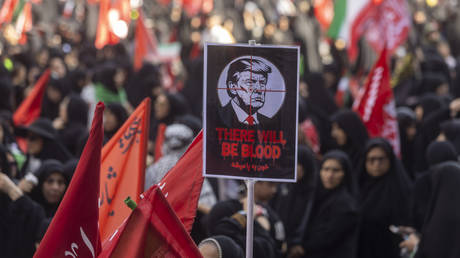
Donald Trump claims it's a done deal. Tehran insists nobody is talking. Welcome to the maddening reality of back-channel Middle East diplomacy, where the truth usually sits somewhere in the quiet corridors of a luxury Doha hotel, far away from the shouting on social media.
If you've been reading the mainstream press coverage about the latest US-Iran diplomatic scramble, you're probably confused. On Monday, Trump blasted out on Truth Social that Iran begged for a meeting and that it's happening immediately in Doha. Hours later, Iran’s Foreign Ministry spokesperson Esmaeil Baghaei completely shut it down, stating flatly that there wouldn't be any negotiation meetings at any level with the American side.
So who's lying? Honestly, probably both of them, at least a little bit.
The real story isn't about whether a public, high-level photo op is happening. It's about a fragile, messy interim ceasefire agreement that's currently being kept alive on life support after a weekend of terrifying military escalation. People tracking this need to look past the political theater and focus on what's actually happening at the technical level. Here's what's really going on behind the scenes in Qatar and why this diplomatic friction matters for global energy security.
The Fog of the Doha Contradiction
To understand why Washington and Tehran are sending such wildly different signals, you have to look at their target audiences.
Trump wants to project absolute strength and portray Iran as coming to the table on his terms. He told reporters in the Oval Office that the meeting would center on the "denuclearisation of Iran," taking a definitive, unyielding stance. Meanwhile, the Iranian government faces intense domestic pressure from hardliners who view any direct talks with Washington as a betrayal, especially after recent military clashes.
By sending a technical delegation to Doha while publicly denying "bilateral negotiations," Tehran creates plausible deniability. They can talk to Qatari and Pakistani mediators, who then walk across the hallway to talk to US envoys like Steve Witkoff and Jared Kushner. It's indirect diplomacy at its finest. It allows both sides to negotiate without admitting they're sitting in the same room.
The Real Crisis is the Strait of Hormuz
While Trump talks about denuclearization, the actual emergency bringing technical teams to Qatar is maritime security. The 14-point memorandum of understanding signed on June 17 was supposed to guarantee a 60-day window of peace. Instead, we just witnessed a massive weekend flare-up.
- The Catalyst: The US accused Iran of attacking two commercial cargo vessels near Oman, right outside the strategic bottleneck of the Strait of Hormuz.
- The Retaliation: US forces launched targeted strikes on Iranian military facilities over the weekend.
- The Counter-Strike: Iran fired ballistic missiles and drones at US military bases in Bahrain and Kuwait on Sunday.
This directly threatens the core of the interim deal. Under Article 5 of the memorandum, Iran committed to ensuring the safe passage of commercial ships. In return, the US agreed to lift its chokehold on Iranian ports.
The breakdown happened because of a fundamental dispute over who controls the traffic. Iran wants to enforce new transit fees and force ships to coordinate directly with Tehran before passing through the strait. The US views this as a blatant violation of international navigation laws. Last week's talks in Switzerland were supposed to set up a direct military hotline between the US military and the Islamic Revolutionary Guard Corps to handle these disputes, but that communication channel isn't working yet.
The $6 Billion Leverage Play
There's also a massive financial undercurrent to these delayed talks. Iranian President Masoud Pezeshkian recently went on state media to boast that $6 billion of the $12 billion in Iranian assets frozen in Qatari banks would be unfrozen as part of this deal. He framed it as a major victory.
But Iranian officials like Deputy Foreign Minister Kazem Gharibabadi are making it clear that technical talks won't move forward into a broader, permanent treaty until that cash actually hits their accounts. Tehran is using the threat of walked-back talks to make sure Washington doesn't stall the sanctions relief.
What Happens Next
Don't expect a grand signing ceremony anytime soon. The mistrust between these two sides is too deep, and regional wildcards make everything unpredictable. For instance, Lebanese Parliament Speaker Nabih Berri has already thrown cold water on a parallel US-backed border arrangement between Israel and Hezbollah, which is deeply tied to the broader US-Iran architecture.
Instead of watching for a major diplomatic breakthrough, watch these specific markers over the next 48 hours to see if the region avoids a wider war:
- Watch the shipping lanes: If commercial vessels resume normal, unharassed transit through the Strait of Hormuz, it means the indirect technical teams in Doha successfully patched up Article 5.
- Monitor the hotline: Look for confirmation that the communication channel between the US military and the IRGC is functional. Without it, another miscalculation in the Gulf is inevitable.
- Track the asset transfers: Keep an eye on whether the Qatari banking channels successfully process the release of those frozen Iranian funds, which remains Tehran's primary condition for keeping the peace.
(mh=0tsfgPKBvEq_de4S)0.jpg)