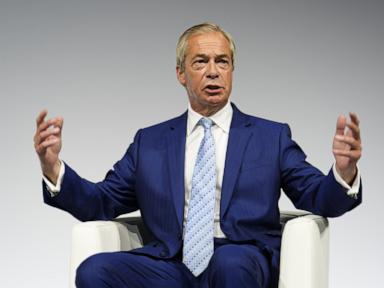
Nigel Farage is in trouble again. It's not about his rhetoric this time. It's about his money. Specifically, it's about who paid for his lifestyle before he entered parliament.
The Reform UK leader faces a major text-book compliance nightmare. Fresh disclosures show he accepted a stream of high-value benefits from George Cottrell. Cottrell happens to be a convicted white-collar criminal. The gifts included elite private security, social media staff, and rent-free living in a five-storey Westminster townhouse. None of this was declared on Farage's parliamentary register of interests.
This isn't just a minor administrative oversight. It's a massive transparency crisis that threatens the core branding of Reform UK. Here is exactly what's going on behind the scenes, why the standard defense isn't holding up, and what it means for British politics.
The Secret Benefactor Behind the Scenes
Politicians love to talk about being men of the people. Farage built his entire career on that exact premise. But people don't usually have an aristocratic multi-millionaire covering their daily overheads.
George Cottrell is known to insiders as "Posh George." He's a 32-year-old aristocrat who has been a fixture in Farage's inner circle since the Brexit referendum. In 2016, US federal agents arrested him on a string of extortion and money laundering charges. He eventually pleaded guilty to a single count of wire fraud and served eight months in an Arizona prison. Lately, he has been linked to Tether.bet, an offshore cryptocurrency gambling platform.
Cottrell didn't just offer Farage a shoulder to lean on. He provided serious operational infrastructure.
According to investigative findings published by The Sunday Times, Cottrell personally funded three staff members tasked with managing Farage's explosive social media growth. He provided ex-military bodyguards and private drivers. He even gave Farage access to an expensive townhouse near Buckingham Palace.
Farage didn't pay a penny for these. He didn't tell parliament either.
The Art of the Bribe and the Book That Blew Up
The story gets much worse. It takes a turn into pure political satire.
Recently, Cottrell co-authored a book. It's titled How to Launder Money: A Guide for Law Enforcement, Prosecutors and Policymakers. You can't make this up. It was written alongside Lawrence Burke Files, a financial crime investigator.
Opponents are already using this text as political ammunition. One specific chapter stands out. It's titled "The Art of the Bribe."
In that chapter, Cottrell explains exactly how wealth can buy political influence. He writes that non-cash gifts are perfect because they look like "a mistake of overexuberance in friendship." He explains that paying a target's expenses passes unnoticed and stays untraceable.
That is an astonishingly precise description of the exact arrangement he had with Farage.
Cottrell's legal team says the book is educational. They claim it was meant to help law enforcement spot corruption, not facilitate it. They insist he never expected to profit from supporting Farage. They say they're just friends who share an ideology.
The timing is incredibly awkward. The optics are devastating.
Why the Personal Capacity Defense Fails
Reform UK is fighting back hard. Their economic spokesperson, Robert Jenrick, went on television to defend the boss. His argument is simple. He says the gifts were given in a purely personal capacity before Farage became an MP.
Under parliamentary rules, newly elected MPs must declare any financial benefits worth over £300 received in the year leading up to their election. There is a loophole. You don't have to declare gifts that are purely personal. Jenrick argued that Cottrell's support was tied to Farage's work as a GB News host and reality television star. He said friends can give friends gifts.
That defense fell apart instantly.
Evidence emerged that Cottrell was handing out official Reform UK business cards. The cards featured the party logo and Farage's direct office email. The party had to pivot fast. They claimed Cottrell was merely an "unpaid volunteer" and the cards helped people get in touch with the office.
You can't have it both ways. You can't claim an arrangement is purely personal while your benefactor carries official party branding to connect people with your political office. It looks coordinated. It looks political.
Farage did declare some things from Cottrell. He registered a £9,253 trip to Belgium and a £15,276 private flight in the US. Why register the flights but omit the house, the security, and the staff? It makes no sense.
A Pattern of Financial Opacity
This isn't an isolated incident. Farage is already under formal investigation by the Parliamentary Standards Commissioner, Daniel Greenberg.
That inquiry centers on a massive £5 million gift Farage received from Christopher Harborne. Harborne is a Thailand-based cryptocurrency billionaire and a major shareholder in Tether. Farage failed to declare that money before the 2024 election. He claimed it was an unconditional gift unrelated to his political career.
Later, he changed his story. He said the money was for personal security. Then he claimed it was a reward for achieving Brexit.
Watchdogs are losing patience. Sir Alistair Graham, the former chair of the Committee on Standards in Public Life, has called for both investigations to be merged. He stated clearly that these developments raise serious doubts about Farage's integrity. The Liberal Democrats and Labour are demanding immediate answers.
Farage denies all wrongdoing. He says the allegations are a contrived hit piece by newspapers that oppose his platform. He claims he followed the rules completely. He is even threatening legal action.
The Imminent Crackdown on Political Wealth
The political fallout from this is moving fast. The government is using the scandal to justify an immediate overhaul of how British democracy is financed.
Ministers are introducing a strict cap on political donations. No single individual will be allowed to give more than £100,000 in a calendar year. This targets the multi-millionaires who hold outsized influence over party structures.
The new rules will shut down the foreign donor loophole. Anyone moving to the UK from abroad will face a one-year waiting period before they can make large donations. This stops wealthy individuals from registering to vote simply to bypass foreign funding bans.
The government is targeting corporate donations too. They will analyze a company's actual profits, not just revenues, to ensure businesses aren't being used as empty shell entities for wealthy donors.
Crucially, candidates will face disclosure requirements before they even get elected. Unsuccessful candidates used to escape this scrutiny. Not anymore. Anyone standing for office will have to declare donations over £2,230.
What Happens Next
The scrutiny on Reform UK isn't going away. If you want to see how this plays out, watch these specific areas.
First, track the Parliamentary Standards Commissioner's upcoming decision on whether to launch a second formal inquiry into the Cottrell benefits. If Greenberg opens a twin probe, Farage will face intense legal pressure.
Second, watch the parliamentary debate on the new £100,000 donation cap. Reform UK relies heavily on a small pool of incredibly wealthy backers. These limits could severely damage their long-term campaign funding.
Keep an eye on the official parliamentary register updates. Farage will likely be forced to amend his filings or face direct sanctions from the House of Commons. The days of treating high-value political support as a casual favor between friends are officially over.