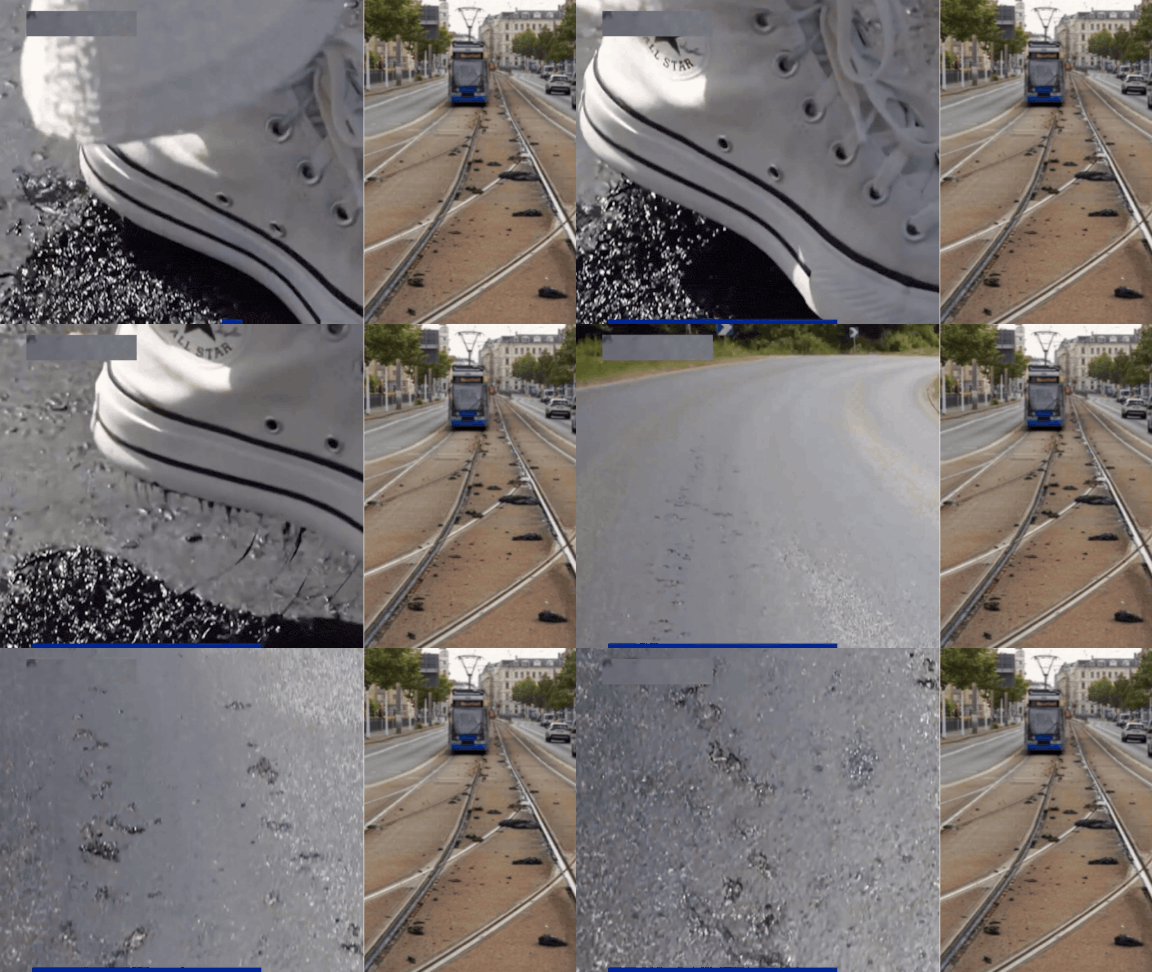
Western Europe isn't built for this. If you want proof, look at the highways outside Berlin or the transit networks in Leipzig.
Right now, an unprecedented June heatwave driven by a stubborn weather pattern known as an Omega block is literally cooking the continent. We aren't just talking about broken temperature records, though those are tumbling fast—Paris hit 40.9°C, and parts of Germany are registering a blistering 41.7°C. The real story is that the physical infrastructure of Europe is structurally failing because it was designed for a climate that no longer exists. You might also find this similar story insightful: Why Beijing Defense Of The Akio Yaita Attack Changes The Cross Strait Rules.
Roads are liquefying in France. Autobahn lanes are exploding in Germany. Steel tram tracks are buckling under the intense thermal expansion. It’s a chaotic wake-up call for city planners and engineers across the globe.
The Physics of a Meltdown
Roads don't just get hot; they change state. The asphalt used across French roads relies heavily on bitumen as a binding agent. Bitumen is viscoelastic. When temperatures hover around the seasonal average, it behaves perfectly, absorbing the weight of heavy vehicles. As reported in detailed articles by BBC News, the implications are notable.
But when ambient temperatures cross 40°C, the surface temperature of dark asphalt can easily soar past 60°C. At that point, the bitumen softens into a sticky fluid. Heavy trucks roll over it and simply rut the road to pieces, stripping away the top layer and exposing the underlying aggregate.
In Germany, the problem manifests as "blow-ups" on the legendary Autobahn. Huge stretches of the A2 motorway outside Berlin recently ruptured across several lanes. Why? Because many of these older highways are built with rigid concrete slabs. When concrete gets hot, it expands. Engineers leave small joints between the slabs to accommodate this movement, but this heat wave exceeds the design limits.
The slabs expanded so aggressively that they ran out of room, smashed into each other, and buckled upward under the immense pressure, creating literal launchpads on a highway where people drive over 130 km/h.
Why the Trains and Trams Stopped
It’s just as bad on the tracks. If you tried to ride a tram in Leipzig or Nuremberg over the weekend, you found yourself stranded.
The issue wasn't even the steel rails themselves melting, though track warping is a massive issue for regional trains. Instead, the specific compound used to seal the joints between the tracks and the surrounding city asphalt liquefied. This hot, gooey sealant seeped directly into the track switches and onto the rails, making it physically impossible for the trams to operate safely. The transit authorities had to completely shut down the networks and swap in replacement buses.
[ Extreme Ambient Heat ]
          │
          ▼
[ Asphalt Surface Hits 60°C+ ]
          │
          ▼
[ Bitumen Binding Agent Softens ] ──► Track Sealants Liquefy
          │                                   │
          ▼                                   ▼
[ Rutting & Road Failures ]           [ Jammed Tram Switches ]
Further north, Deutsche Bahn had to issue a blanket warning advising citizens against any non-essential travel. Long-distance rail infrastructure is under so much thermal stress that standard safety margins are out the window. Overhead power lines sag as the metal expands, and when a storm knocked a tree onto a power line in Brandenburg, a train from Hamburg to Prague instantly lost power. Without electricity, the air conditioning failed, turning the carriages into an oven and sending passengers to the hospital with severe heat illnesses.
The Air Conditioning Paradox
This brings us to the core issue plaguing European living standards during these spikes: the complete lack of domestic cooling infrastructure.
According to data from the International Energy Agency, air conditioning ownership in European households sits at a meager 20%. For generations, buildings in Western and Central Europe were intentionally engineered to retain heat to combat cold winters. Thick masonry, heavy insulation, and large windows designed to capture sunlight are fantastic in December. In June, during a historic heatwave, they turn apartments into brick kilns.
The consequences are tragic. In the western German city of Dormagen, emergency services had to rapidly evacuate dozens of residents from a nursing home after indoor temperatures hit a lethal 35°C inside the facility.
In France, the public hospital network is buckling under a 33% surge in emergency admissions. Over 3,000 people hit emergency rooms in a 24-hour window, suffering from severe dehydration, heatstroke, and cardiovascular shock.
What Happens Next
We have to stop treating these events as freak anomalies. Climate scientists at the World Weather Attribution group noted that these stifling nighttime temperatures—where the mercury refuses to drop below 22°C—are now 100 times more likely to occur than they were just twenty years ago.
When the night stays hot, the human body cannot shed heat, and infrastructure never gets a chance to cool down and contract.
If you are currently dealing with the fallout of this heatwave or planning travel across Europe, here are the immediate steps you need to take:
- Check transit statuses early: Do not assume your train or tram is running. Check regional apps like DB Navigator or local transit feeds before leaving your accommodation.
- Avoid road travel during peak sun: If you are driving on major European motorways, try to travel during early morning hours when the asphalt and concrete slabs are at their lowest temperatures to minimize the risk of hitting a sudden highway blow-up.
- Monitor vulnerable neighbors: If you live in an apartment building without climate control, check on elderly neighbors. Indoor heat stress builds cumulatively over three to four days.


:max_bytes(150000):strip_icc()/Sabyasachia-998984251b434f3a9c350c5694ef7f32.jpeg)