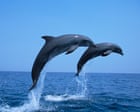
You have probably seen the videos online. Gorgeous footage of bottlenose dolphins leaping gracefully in the wake of fishing boats, seemingly playing games with the crew. It looks like a heartwarming Disney moment.
It isn't.
What you are actually witnessing is a desperate survival strategy. Marine scientists studying the Adriatic Sea have confirmed that dolphins are increasingly trailing commercial trawlers because humans have completely cleaned out their natural food supply. The Adriatic is suffering from chronic, systematic overfishing. The dolphins aren't playing. They are begging for scraps because they are starving.
This behavioral shift highlights a breaking point in marine ecology. When top predators abandon hunting in the open ocean to become garbage collectors for industrial fishing vessels, the entire ecosystem is blinking red.
The Adriatic Sea is Running Out of Fish
The Adriatic Sea is a semi-enclosed pocket of the Mediterranean. Historically, it was a incredibly productive marine habitat, teeming with sardines, anchovies, and bottom-dwelling fish. Today, it is one of the most heavily trawled marine regions on earth.
Industrial bottom trawlers drag massive, weighted nets across the seafloor. They scoop up everything in their path. This practice destroys benthic habitats and leaves behind an underwater desert. Local fish stocks have plummeted over the last few decades. Small pelagic fish like sardines have faced severe population collapses due to fleet overcapacity and weak regulatory enforcement.
Dolphins need a lot of calories. A mature bottlenose dolphin eats around 15 to 30 pounds of fish every single day. When the open water no longer contains healthy schools of fish, these highly intelligent mammals do what any smart animal does. They adapt. They look for the easiest alternative source of food.
That alternative is the industrial fishing fleet. Trawlers stir up the seabed, exposing hidden fish, and their nets trap thousands of fish at once. For a hungry dolphin, a moving trawler net is a giant, floating buffet.
The Mechanics of the Trawler Trap
Dolphins have figured out the exact schedules and sounds of commercial fishing boats. They recognize the specific acoustic signature of a trawler engine dropping its nets. When the engine shifts gears, it acts like a dinner bell.
The animals swim directly behind or alongside the nets as they are dragged through the water. They pluck fish right out of the mesh or snatch the injured fish that escape the sides. They also wait around for the discards. Trawlers catch huge amounts of non-target species, known as bycatch. Crews sort through the catch on deck and dump the dead or dying unwanted fish back into the sea.
It looks like a win-win on the surface. The fishermen catch their target species, and the dolphins get an easy meal without spending hours hunting.
But it is a devastating illusion.
First, the quality of food is terrible. Dolphins naturally hunt high-energy, living prey that offers optimal nutrition. Eating dead, half-crushed discards from a trawler deck is the marine equivalent of living off fast-food dumpster scraps. Over time, this poor diet impacts their reproductive health and immune systems.
Second, the physical danger is extreme. Swimming close to heavy machinery and massive nylon nets in turbulent water is incredibly risky. Dolphins frequently get caught in the gear. They get tangled in lines, stuck in the mouth of the net, or struck by boat propellers. Many drown because they cannot surface to breathe.
How Scavenging Destroys Dolphin Society
The damage goes way deeper than physical injuries. It is actively tearing apart the social fabric of dolphin communities.
Dolphins are profoundly social creatures. They live in complex pods with intricate cultural behaviors, communication dialects, and cooperative hunting strategies. In a healthy ocean, a pod of dolphins works together to herd schools of fish against the coast or trap them in defensive circles. This requires teamwork, trust, and communication. It is a skill passed down through generations.
Trawler scavenging ruins all of that.
When a boat drops its net, it creates an intense, localized concentration of food. Instead of cooperating, individual dolphins are forced to compete with one another for the best position near the net. The social dynamic shifts from teamwork to pure aggression. Scientists have documented increased biting, ramming, and territorial behavior among dolphins targeting trawlers.
Older dolphins stop teaching younger calves how to hunt wild fish in the open sea. Why expend energy learning the difficult art of tracking wild schools when you can just follow a noisy boat? A whole generation of young dolphins is growing up without the basic survival skills needed to live in a wild ocean. If the fishing fleets suddenly stop operating or change their routes, these animals will face immediate starvation because they don't know how to hunt normally anymore.
The Myth of Sustainable Coexistence
Some fishing industry groups try to spin this behavior as proof that dolphins and modern fisheries can coexist. They claim that the animals are thriving alongside the boats. This is greenwashing at its worst.
The data tells a completely different story. Marine biology surveys in the northern and central Adriatic show that while dolphin sightings near trawlers are up, overall dolphin population health is in a downward trend. Calf survival rates are dropping in areas with heavy trawling pressure. The animals look fat and well-fed in photos, but internal examinations of stranded dolphins reveal high parasite loads, plastic ingestion, and signs of chronic nutritional stress.
Furthermore, this relationship creates intense conflict between dolphins and fishermen. Dolphins can rip expensive nets to get at the fish inside, causing thousands of dollars in damage per trip. This economic loss drives some fishermen to view dolphins as pests rather than protected wildlife. Cases of intentional poisoning, shooting, or harassment of dolphins have been documented across the Mediterranean coast as fishers try to protect their declining catches.
What Needs to Change Right Now
We cannot solve this problem by simply telling the dolphins to stop following boats. They are driven by hunger. The only real solution is to restore the health of the Adriatic Sea so that wild hunting becomes viable again.
Enforce Massive No-Take Marine Reserves
We need to completely ban all commercial fishing, especially bottom trawling, in large, continuous zones of the Adriatic. These no-take zones act as fish nurseries. When you give a marine habitat a total break from industrial nets, fish populations recover at an astonishing speed. The fish eventually spill over into the surrounding waters, replenishing the wider sea and giving dolphins their natural prey back.
Mandate Pinger Technology and Net Modifications
All trawlers operating in the Adriatic should be legally required to install acoustic deterrent devices, known as pingers, on their nets. These devices emit low-intensity sounds that warn dolphins to keep their distance, reducing the risk of entanglement. Additionally, boats must use exclusion devices that allow larger marine mammals to slip out of nets safely if they get trapped inside.
Subsidize the Transition Away from Bottom Trawling
Bottom trawling is the most destructive fishing method in existence. Governments need to stop subsidizing fuel and gear for large-scale industrial trawlers. Instead, those funds should be redirected to support artisanal fishers who use low-impact gears like lines and traps. Fewer trawlers mean fewer artificial food sources for dolphins and less destruction of the marine environment.
Implement Real-Time Electronic Monitoring
Illegal, unreported, and unregulated fishing is rampant in the Mediterranean. Every commercial vessel over a certain size must be equipped with tamper-proof vessel monitoring systems and onboard cameras. If a boat fishes in a protected area or illegally dumps massive amounts of bycatch, they need to face immediate, severe financial penalties.
The sight of dolphins behind trawling boats is a warning sign of an ecosystem on life support. If we do not drastically scale back industrial fishing in the Adriatic immediately, we will lose both the fisheries and the apex predators that rely on them.