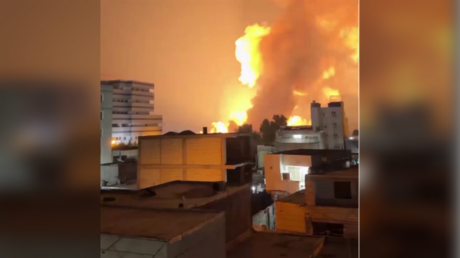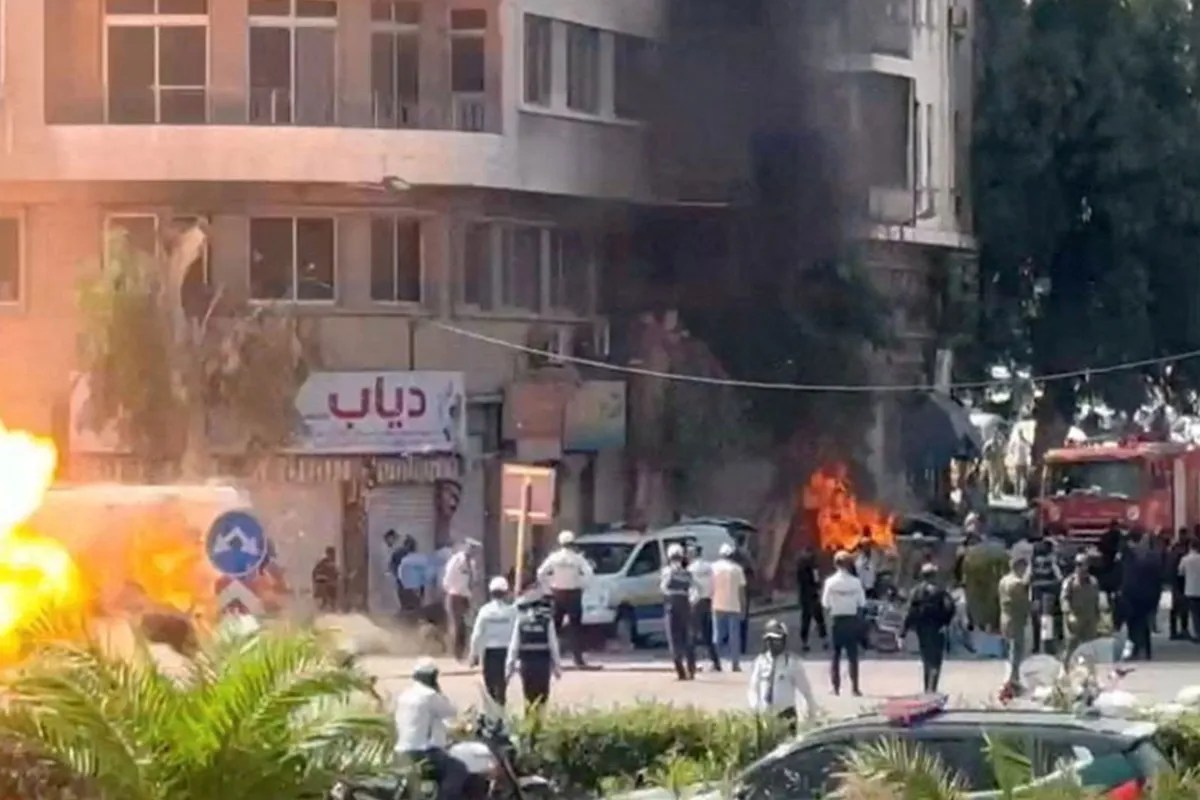
Two improvised explosive devices tore through central Damascus on Tuesday morning, shattering windows and rattling nerves just down the street from where French President Emmanuel Macron spent the night. It's a stark reminder of how fragile postwar stability remains. The bombs went off near the heavily fortified Four Seasons Hotel while Macron was at the presidential palace meeting Syria's new leader, Ahmed al-Sharaa. At least 18 people were wounded, including four police officers.
Smoke billowed over a busy capital street, charred remnants of a van and a motorcycle littered the pavement, and blood stained the asphalt. Yet, the diplomatic show went on. Macron didn't even hear the blasts, according to French officials. He stayed on schedule, embraced Sharaa for the cameras, and double downed on France's commitment to rebuilding economic ties with a country trying to emerge from 14 years of brutal civil war.
If whoever planted those bombs thought a high-profile scare would chase France out of Syria, they miscalculated. This landmark trip isn't just a quick photo op. It's a calculated, high-stakes geopolitical gamble that has been months in the making.
Shaking the Capital but Not the Mission
Damascus had been mostly quiet during the monumental power transition that followed Bashar al-Assad's ouster in late 2024. That quiet ended abruptly over the last week. Just days before the hotel blasts, another bomb ripped through a crowded café near the Justice Palace, killing at least 10 people and wounding dozens more. Nobody has claimed responsibility for either attack yet, but the timing of this latest strike is obvious. It was designed to embarrass the new Syrian administration on the global stage.
The Four Seasons Hotel isn't just any lodging. It's the nerve center for United Nations staff, visiting foreign diplomats, and international aid workers. It's supposed to be one of the safest patches of land in the entire country.
According to reports from the Syrian Interior Ministry, attackers hid one explosive device inside a common garbage bin and packed another into a parked car. A video circulating online caught the terrifying moment Syrian police officers approached the bin before it detonated.
Despite the chaos, the Elysee Palace immediately signaled that Macron was safe and the visit would continue uninterrupted. Hours later, Macron took to social media to state that nothing would smother the aspiration of the Syrian people to live in a sovereign, safe, and united nation. He didn't blink.
Inside the Four Seasons Attack
Let's look at the cold facts of what went down on the ground on Tuesday.
The security breach is a massive headache for Syria's new intelligence services. For over a year, the Sharaa government has hammered home the message that Damascus is open for business and safe for Western dignitaries. Bringing a massive economic delegation into a former war zone requires months of security sweeps and tight cooperation between French intelligence and local forces. The fact that two separate IEDs could be planted and detonated right outside the main diplomatic hub shows that insurgent sleeper cells still hold a terrifying level of access.
Local emergency crews rushed to the scene near the Tourism Ministry headquarters and the Damascus National Museum to treat the 18 wounded. Fortunately, no deaths were reported immediately. Security forces quickly cordoned off the busy thoroughfare, checking vehicles and implementing sudden checkpoints across the capital.
While the physical damage was contained, the psychological blow was substantial. The capital had prided itself on staying peaceful while remote provinces wrestled with sporadic kidnappings and targeted assassinations by remnants of the Islamic State and old Assad regime loyalists.
Why France Is Betting Big on Syria Post Assad Era
Macron is the first major Western head of state to step foot in Damascus since the regime change. That's a massive deal. France severed all diplomatic ties with Syria back in 2012 to protest Assad's violent crackdown on civilians. Turning the page required a total rewrite of French foreign policy in the Middle East.
You might wonder why France is sticking its neck out like this. It's about securing a foothold before anyone else does. Macron played a heavy hand in convincing the European Union and the United States to ease up on the crushing economic sanctions that isolated Syria for over a decade. He wants French corporations at the front of the line as the country rebuilds.
The French president didn't travel light. He brought a heavyweight corporate delegation with him, including high-ranking executives from shipping giant CMA CGM and energy titan TotalEnergies. They aren't in town to offer charity. They're looking at hundreds of billions of dollars in potential infrastructure contracts.
During the visit, French and Syrian officials signed more than a dozen commercial agreements. These aren't vague promises. They include concrete plans to rebuild decimated water and electricity networks in Homs, supply technical aid to the Syrian Central Bank, and hand over management upgrades for the Damascus airport to CMA CGM. France even agreed to start returning over 43 million pounds of illicit assets seized from Rifaat al-Assad, the late uncle of the deposed dictator, who had stored his stolen wealth in French real estate.
The Delicate Tightrope of President Sharaa
Ahmed al-Sharaa faces a staggering challenge. He used to lead Hayat Tahrir al-Sham, an insurgent group that originally grew out of al-Qaeda. For years, Western intelligence agencies viewed him as an extremist threat.
Since taking power, Sharaa has spent every waking hour rebranding himself. He traded his combat fatigues for tailored business suits, protected minority religious communities, and promised sweeping democratic and economic reforms. He needs Western validation to unlock the international funding required to fix a broken nation. Macron's presence in the capital provides exactly that validation.
That's why these explosions sting the new government so deeply. Sharaa needs to prove he can control his own capital city if he wants global banks to trust his administration. French support has been invaluable to him, acting as a bridge not just to Europe, but also helping mediate highly sensitive border issues with Israel and regional dynamics in Lebanon.
The reality inside Syria is incredibly grim. Roughly 90 percent of the population lives well below the poverty line. Rolling blackouts plague major cities, running water is a luxury in many neighborhoods, and the basic infrastructure is completely shot. The only way out of this economic black hole is massive foreign capital injection, and that capital won't arrive if CEOs think they'll get blown up outside their hotels.
What This Means for Global Investors Right Now
If you're an international investor watching Syria, yesterday's attack offers a harsh dose of reality. The economic potential is vast, but the security risks are real and unpredictable.
The fact that TotalEnergies and CMA CGM are moving forward with infrastructure deals tells you everything you need to know about corporate risk tolerance in 2026. Big companies look at long-term trajectories. They know postwar environments are always messy and violent in the early stages.
The key takeaway is that the political will to reintegrate Syria into the global economy remains intact. Macron and Sharaa used the aftermath of the blasts to announce something huge: both countries are officially reinstating full ambassadors. This officially restores formal diplomatic relations for the first time in 14 years. It’s a massive signal to the rest of the world that the diplomatic train has left the station, and it isn't stopping for roadside bombs.
Moving Forward in a Postwar Economy
The situation on the ground requires a highly balanced approach if you're looking to understand or participate in the reconstruction of Syria.
First, closely monitor the security updates coming out of Damascus over the next few weeks. The Syrian Interior Ministry's investigation into these hotel blasts will reveal whether this was a one-off attack by an isolated cell or a coordinated campaign by a well-funded insurgent network.
Second, watch how Washington and other European capitals react to Macron's bold moves. If the US follows France's lead and continues to dial back its sanctions regime, a flood of corporate interest will likely follow the path blazed by French logistics and energy companies.
Keep your eyes on the execution of the airport and utility deals signed this week in Damascus. They'll serve as the ultimate litmus test for doing business in the post-Assad era.