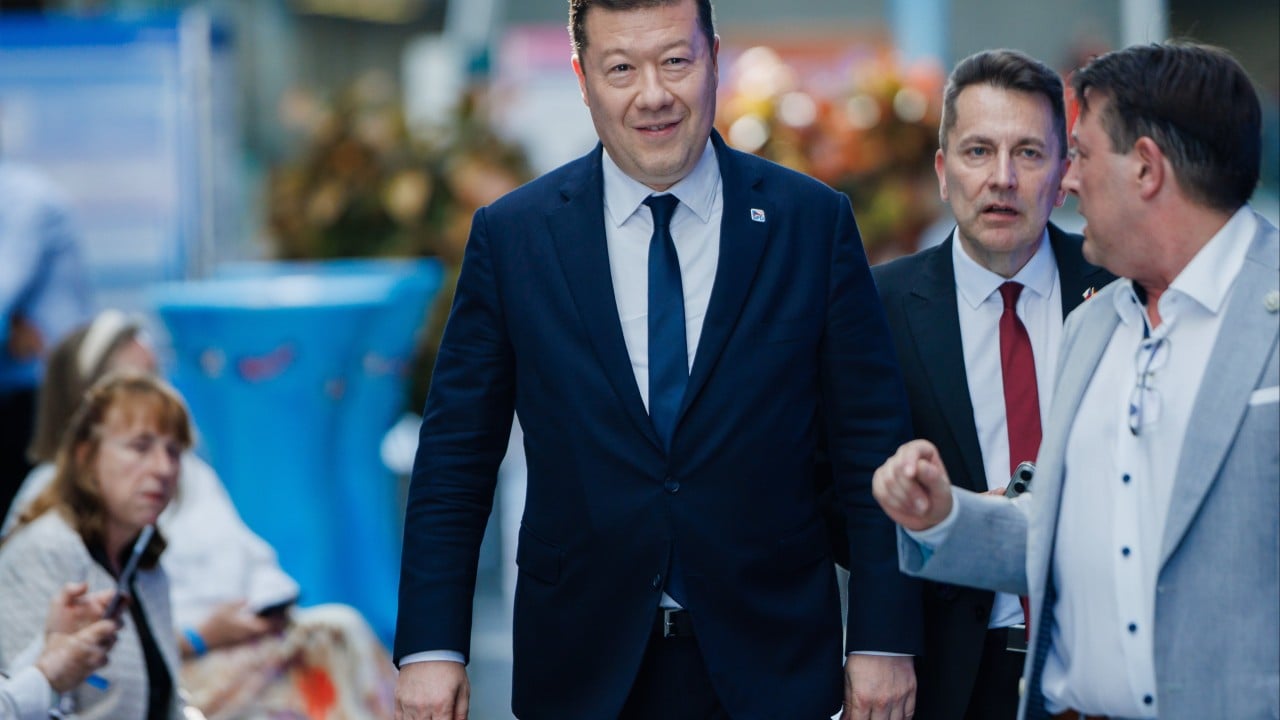
When a delegation of Czech lawmakers arrived in Beijing on July 20, 2026, it wasn't just another routine foreign trip. Led by Tomio Okamura, speaker of the Czech lower house, this five-day diplomatic outing marks the first high-level engagement between Prague and Beijing since 2019.
On paper, the goals sound practical enough. Okamura and a business contingent representing 40 Czech firms in energy, industrial technology, and mechanical engineering are looking for economic wins. They want direct flights, a bump in Chinese tourism, and visa-free access for Czech travel. You might also find this similar story insightful: Why Spain's Pact Of Forgetting Still Divides Families Ninety Years Later.
The real story, though, isn't about tourist visas. It's about a fragile, fractured foreign policy experiment playing out in Central Europe.
Pragmatism Meets a Divided Government
For years, Czech-Chinese relations sat in a deep freeze. Previous leadership in Prague openly courted Taiwan, hosted prominent Taiwanese figures, and took aggressive stances on security issues. Czech intelligence agencies spent years warning against Chinese tech infrastructure, and Prague established itself as one of the most vocal security hawks in Europe. As reported in detailed articles by USA.gov, the implications are widespread.
A change in the Czech government late last year flipped the script. The executive branch and the lower house started steering toward economic pragmatism, hoping to reopen commercial doors that had slammed shut.
Here is the catch. The Czech political elite is heavily split. While the lower house and key ministers are pursuing a thaw, Czech President Petr Pavel and the Senate remain firmly anti-Beijing and pro-Taiwan.
You can't run a coherent foreign policy when the head of state and the head of the legislature are pulling in opposite directions. Chinese analysts and European observers know this. Beijing views this visit not as a grand reconciliation, but as a preliminary attempt to gauge what Prague actually wants.
The Espionage Shadow Hanging Over the Visit
If navigating domestic political divisions wasn't tough enough, the delegation stepped right into a active diplomatic standoff.
Just days before Okamura's plane touched down, news broke that a Czech businessman had been detained at an airport in China under national security investigations—specifically espionage allegations. That detention followed the arrest of Chinese citizen Yang Yiming in Prague earlier this year under updated Czech espionage statutes.
Czech Foreign Minister Petr Macinka publicly insists these two cases are entirely separate. But behind closed doors, everyone understands the leverage at play. Sending a deputy foreign minister along with the commercial delegation gives Prague a direct line to discuss consular access, but it highlights the tightrope Czech officials are walking.
Trying to pitch economic cooperation while handling mutual espionage arrests is a messy business.
Why China Is Proceeding With Extreme Caution
Don't expect Beijing to shower Prague with massive investment deals anytime soon. Chinese foreign policy strategists have learned the hard way that Central European politics can swing wildly from one election cycle to the next.
Without cross-party agreement in Prague, any agreement signed today could easily be scrapped by a different coalition tomorrow. Beijing sees the Czech Republic's pragmatic wing reaching out, but it also sees a pro-Taiwan president and an active intelligence apparatus that views Chinese state firms with deep skepticism.
Beijing's play here is tactical. They'll listen, entertain talks on trade and tourism, and see if the Czech lower house can deliver real policy stability. Until then, Beijing isn't buying the narrative of a permanent diplomatic thaw.
What Real Realignment Actually Requires
For Czech businesses wanting access to Chinese markets, a few business trips won't clear the air. True diplomatic resets require consistency, and right now, Czech foreign policy lacks it.
If you're following Central European affairs or international trade in the region, keep an eye on three specific indicators over the coming months:
- Legislative votes on security regulations: Watch whether the Czech parliament softens its stance on Chinese technology in critical infrastructure or doubles down on existing restrictions.
- Consular resolution on detained nationals: Pay attention to how quickly and quietly the recent airport detention cases are handled. Quick resolutions signal functioning diplomatic channels; drawn-out trials mean deep distrust remains.
- Presidential friction: Monitor how President Pavel reacts to any commercial agreements negotiated during this trip. If the presidency actively blocks or criticizes these moves, foreign investors and diplomats will treat Prague's promises as temporary.