Building a massive hull is the easy part. Convincing high-flying college graduates to land a 30-ton fighter jet on a pitch-black, moving deck in the middle of the Pacific Ocean is where things get complicated.
For years, Western analysts watched China's naval shipyards with a mix of fascination and dread. Hulls were sliding into the water at a pace not seen since World War II. But a warship is just an expensive piece of floating steel without a highly trained crew. Right now, the People’s Liberation Army Navy (PLAN) is facing a critical bottleneck that money alone cannot instantly fix: a severe shortage of qualified carrier-borne aviators. Building on this theme, you can find more in: Why Japan Is Finally Building Its Own Intelligence Agency After Decades Of Relying On America.
Beijing’s latest aggressive carrier recruitment drive tells us everything we need to know about where this fleet is heading. It isn't just about matching the US Navy hull for hull, nor is it strictly about a short-term contingency in the Taiwan Strait. This aggressive talent hunt proves China is structuring its military for sustained, long-range power projection deep into blue-water territory.
The Pilot Bottleneck and the Gaokao Shift
If you want to understand the long-term ambitions of an authoritarian military, look at their recruiting flyers. The PLAN recently expanded its cadet selection pool to include high school graduates from across the nation, shifting away from a historical reliance on traditional military academies. They've even opened up applications to civilian university graduates with science and engineering degrees. Observers at The Washington Post have shared their thoughts on this matter.
This isn't a minor administrative tweak. It's a fundamental shift born out of necessity.
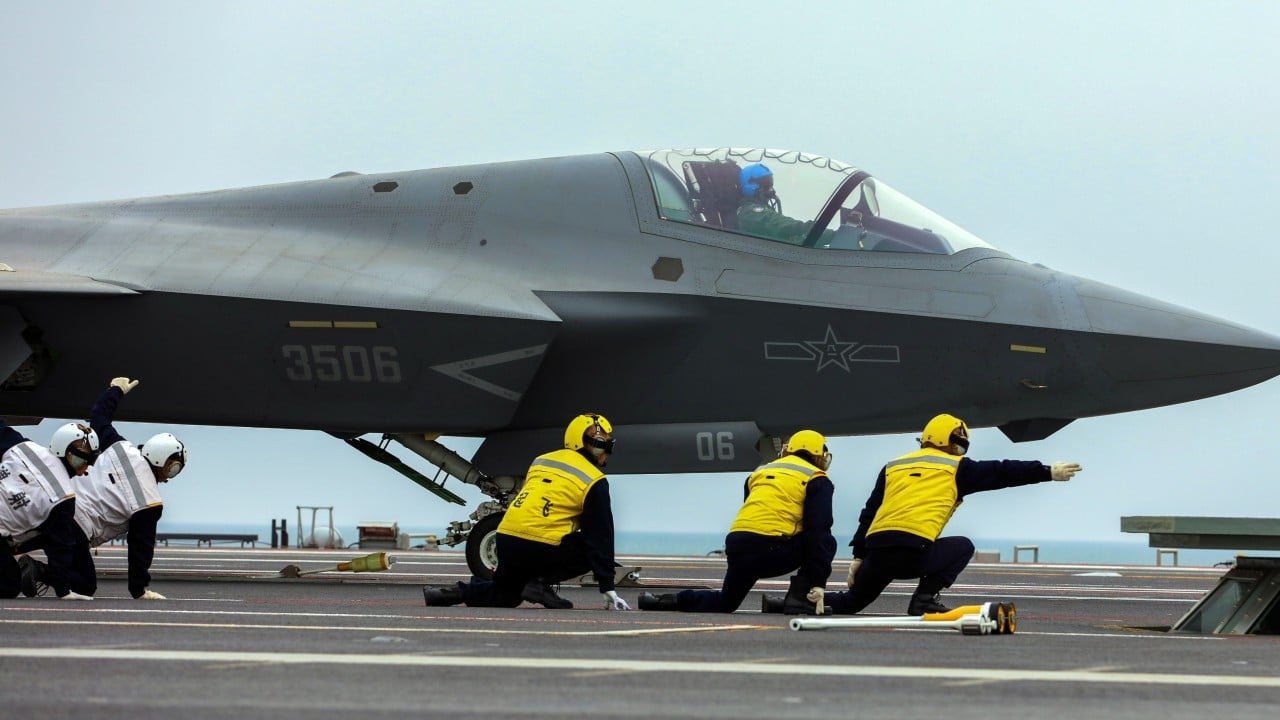
Historically, the PLA recruited pilots from a narrow pool of existing military personnel or specialized aviation schools. But flying a carrier-based jet like the J-15 Flying Shark—or the newer J-35 stealth fighter—demands an entirely different level of cognitive ability and spatial awareness. Operating an electromagnetic catapult system, like the one installed on China’s newest carrier, the Fujian, requires tech-savvy operators who understand complex systems.
By targeting top-tier high school students fresh off the grueling gaokao college entrance exams, the PLAN is competing directly with China's tech sector and elite universities for the brightest minds in the country. They're offering prestige, fast-tracked careers, and the chance to operate the most advanced machinery in the inventory.
But why the rush? It comes down to the math of carrier operations. A single aircraft carrier requires at least two pilots per airframe to maintain operational readiness during extended deployments. With three carriers active or undergoing advanced trials—the Liaoning, the Shandong, and the technologically superior Fujian—the PLAN suddenly needs hundreds of specialized pilots. You can't mass-produce a carrier pilot in twelve months. It takes years of grueling training and immense high-stakes practice.
Why This Isn’t Just a Taiwan Play
A common misconception among casual observers is that China's entire military apparatus is tuned strictly for a Taiwan scenario. If that were true, the carrier program would actually be a massive waste of resources.
Taiwan sits a mere 100 miles from the Chinese mainland. If Beijing decides to launch an amphibious assault or enforce a total blockade, it can easily blanket the island using ground-based missile units, short-range bombers, and land-based fighter squadrons operating from the dozens of military airfields dotting the Eastern Theatre Command. You don't need a multi-billion-dollar carrier strike group to hit a target that sits squarely within the range of your land-based artillery.
Carriers are built for something else entirely: sea control and power projection away from home shores.
The frantic push to train carrier aviators signals that Beijing is preparing for the "day after" a regional conflict, or looking completely past it. The goal is to build a blue-water navy that can push out past the First Island Chain—the line of islands running from Japan down to the Philippines—and operate comfortably in the Western Pacific and the Indian Ocean.
Think about China’s massive economic vulnerabilities. The Chinese economy relies entirely on maritime trade routes. Energy supplies from the Middle East must travel through the Malacca Strait, a maritime choke point heavily patrolled by Western-aligned navies. In a global crisis, land-based aircraft cannot protect a commercial fleet operating thousands of miles away. Carrier strike groups can. By aggressively filling its cockpit pipelines today, Beijing is ensuring that when its next generation of nuclear-powered carriers rolls off the assembly lines in the 2030s, the human infrastructure will be ready to sail them straight into global waters.
The Danger of Learning on the Fly
The PLAN is trying to compress a learning curve that took Western navies a century to master. The US Navy spent decades making catastrophic mistakes, losing pilots, and bending airframes during the mid-20th century to develop the robust safety protocols and training doctrines used today.
China doesn't have the luxury of time, and it shows. The PLAN has suffered multiple fatal training accidents over the years involving the J-15, often linked to mechanical failures or the extreme difficulty of landing on a pitch-heavy carrier deck without modern assists.
To bypass this steep learning curve, China has aggressively re-engineered its training pipeline. They've introduced specialized trainer aircraft like the JL-10H to get cadets accustomed to carrier-style steep approaches early in their flight careers. They are also building extensive land-based simulation facilities that replicate carrier decks down to the exact millimeter, complete with operational catapults and arresting wires.
Yet, simulator hours can only do so much. True operational capability comes from spending months at sea, battling unpredictable winds, salt spray, and night-time operations in high-seas swells. The frantic recruitment drive reveals a quiet anxiety within the PLA leadership: they know they are short on experienced instructors. The pilots who mastered landings on the older, ski-jump style carriers (Liaoning and Shandong) now have to re-learn how to launch using the Fujian's advanced electromagnetic catapults. This leaves fewer veteran aviators available to train the incoming flood of green cadets.
What to Watch Next
If you want to track how fast the PLAN is converting its raw recruitment numbers into actual combat power, stop looking at satellite images of shipyards. Watch the airspace instead.
Keep an eye out for three specific indicators over the next 18 months:
- Night-time Carrier Qualifications: Landing a jet on a carrier at night is widely considered one of the most difficult tasks in military aviation. Watch for state media announcements or tracking data showing sustained night-flight operations. When the new batch of civilian-recruited cadets starts qualifying at night in large numbers, the PLAN's operational readiness will have taken a massive leap forward.
- The J-35 Integration: The introduction of China’s next-generation twin-engine stealth fighter, the J-35, will complicate the training pipeline. Training a pilot to fly a fourth-generation jet is hard enough; training them to maximize a fifth-generation stealth platform while managing carrier acoustics is an entirely different beast.
- Far-Sea Deployments: Watch the geographic footprint of Chinese carrier training loops. If they move beyond the South China Sea and the Philippine Sea, entering the wider Pacific or pushing south toward Oceania, it means their pilot pipeline has achieved the depth needed to sustain high-tempo operations far from mainland logistical safety nets.
Beijing is playing the long game here. Hulls are easy to count, but the real measure of Chinese naval ambition is found in the classrooms and training fields where a new generation of elite pilots is being rapidly spun up. They aren't building a coastal defense force. They're building a global one.