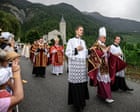
The breaking point finally arrived in the Swiss mountains. After years of quiet tension, the Vatican officially drew a line in the sand, excommunicating the leadership and formal adherents of the Society of Saint Pius X (SSPX). It's the most severe internal rupture the Roman Catholic Church has seen in nearly forty years.
If you think this is just a niche squabble over Latin and old vestments, you're missing the bigger picture. This move redraws the spiritual map for hundreds of thousands of traditionalist Catholics globally. It forces everyday churchgoers into an agonizing, high-stakes choice between loyalty to the Pope and loyalty to what they believe is the unchanging truth.
Why the Swiss Mountain Ordinations Ignited a Firestorm
The immediate trigger happened on Wednesday in Écône, Switzerland. The SSPX went ahead and consecrated four new bishops. They did this without a pontifical mandate from Pope Leo XIV. In the Catholic world, ordaining a bishop without the Pope's permission is the ultimate red line. It's a direct challenge to papal authority.
Pope Leo tried to stop it. He made a direct, heart-wrenching plea to the society's superior general, Rev. Davide Pagliarani, begging the group to turn back and avoid tearing the unity of the church. The society didn't listen. They viewed the consecrations as a sacred duty to preserve traditional Catholic practices. They saw it as an act of survival. With their existing bishops aging or passing away, the SSPX argued they needed new bishops to keep ordaining priests and administering sacraments.
The Vatican response came swiftly on Thursday morning. Cardinal Víctor Manuel Fernández, head of the Dicastery for the Doctrine of the Faith, issued the decree. The Vatican declared that the ordinations were a schismatic act. Because of this, all six bishops involved—the two who performed the ceremony and the four who were ordained—incurred automatic excommunication.
The Hammer Falls on the Laity
The real shockwave isn't just about the bishops. History repeated itself here; a similar showdown occurred back in 1988 under Pope John Paul II. What makes the 2026 decree radically different, and far more severe, is how it targets ordinary followers.
The Vatican's new statement explicitly notes that the lay faithful who formally adhere to the SSPX are now considered in schism and excommunicated. This is a massive escalation. For decades, the Vatican maintained a gray area around the laity attending SSPX chapels. It was discouraged, but church authorities rarely dropped the hammer of formal schism on everyday churchgoers.
That ambiguity is gone. The Holy See is making it clear that you can't keep one foot in the traditionalist breakaway movement and one foot in Rome.
What Excommunication Actually Means for Followers
Let's clear up a common misconception. Excommunication doesn't mean the Church is casting a magical spell to damn someone to hell. It's a severe disciplinary penalty. It strips a Catholic of their right to receive the sacraments, including Holy Communion and confession.
For a deeply religious traditionalist, this is spiritual exile.
The immediate practical fallout is messy. The SSPX operates a vast network of chapels, schools, and seminaries worldwide, with a massive footprint in the United States, particularly in Kansas, as well as France and Argentina. They claim around half a million followers and over 750 priests. Now, every single one of those priests and parishioners faces a definitive choice.
If a layperson continues to formally support and attend SSPX chapels, the Vatican views them as operating outside the Catholic Church. Their marriages in these chapels may be viewed as illicit or invalid. Their confessions won't be recognized by Rome.
The Political Undercurrents and Global Stakes
This isn't happening in a vacuum. The ceremony in Écône drew over 16,000 people from dozens of countries. Observers noted the presence of far-right political figures, including members of the Italian neofascist party Forza Nuova and the new right-wing movement Futuro Nazionale. Traditionalist Catholicism has increasingly become intertwined with broader cultural and political resistance against globalism, liberalism, and modern secular values.
Pope Leo, who took office just last year as the first North American pope, wanted to make church unity his signature focus. He inherited a deeply polarized church. While he tried to mend fences with traditionalists, this open defiance forced his hand. He couldn't ignore a direct threat to papal primacy without risking his authority over the entire global church.
Meanwhile, the Vatican is fighting a multi-front war. While clamping down on the ultra-conservative right in Europe and America, Rome is also struggling to contain a progressive mutiny on the left in Germany, where liberal bishops continue to push for same-sex blessings and female deacons despite explicit Vatican prohibitions.
What to Do If You're Caught in the Crossfire
If you're a Catholic who frequents traditional Latin Masses or has ties to SSPX communities, the time for sitting on the fence is over. The Vatican has forced a clarity that many tried to avoid for decades.
- Audit your canonical alignment. Understand that attending an SSPX chapel is no longer viewed by Rome as a harmless alternative for those who prefer the old liturgy. Consult with a canon lawyer or a diocesan priest in good standing to understand how your local attendance is viewed.
- Look for regularized traditional alternatives. If you love the Latin Mass and traditional liturgy, look for communities under the Priestly Fraternity of St. Peter (FSSP) or the Institute of Christ the King Sovereign Priest (ICKSP). These groups celebrate the traditional rites but remain in full canonical communion with the Pope.
- Prioritize sacramental validity. Ensure that the sacraments you and your family receive are legally recognized by the global Catholic Church. Continuing with an excommunicated clergy risks placing your spiritual life into a parallel structure that Rome has officially severed.