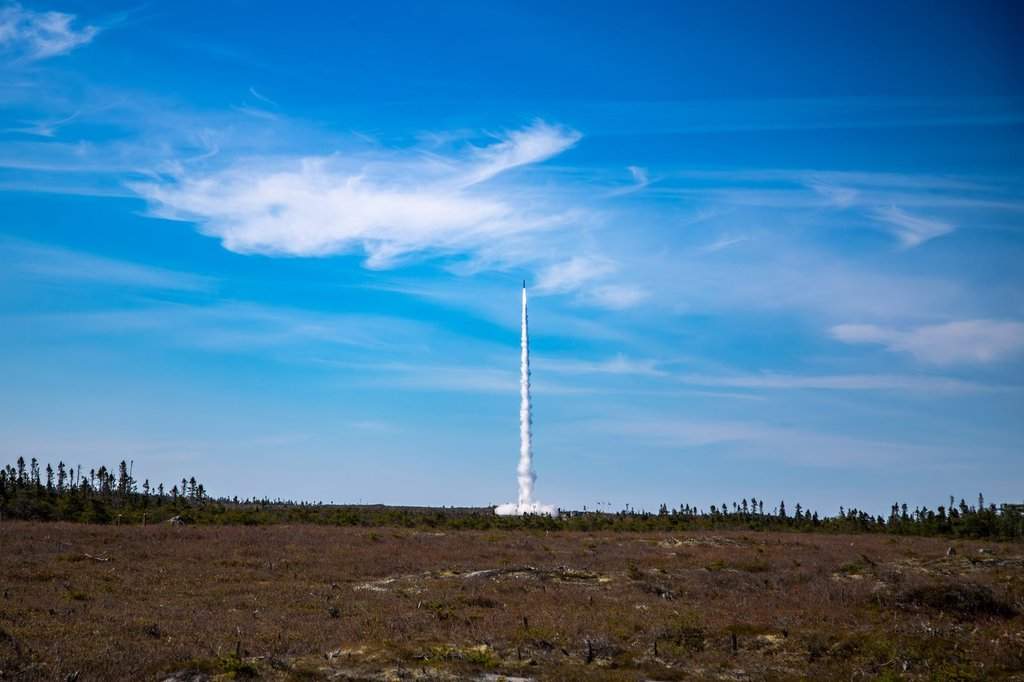
Canada depends on satellites for basically everything. About 20% of the Canadian economy relies on space infrastructure to keep banking networks online and telecommunications running. Yet, the country has never been able to launch its own hardware into orbit. For decades, Canada had to knock on the door of the United States or other foreign nations to get a ride upstairs.
That massive vulnerability explains why a tiny fishing community in Atlantic Canada just landed a major European partner.
Maritime Launch Services (MLS), the operator behind Spaceport Nova Scotia near Canso, just signed an intensive 10-year facility usage contract with Munich-based Isar Aerospace. The goal is straightforward but ambitious: build a dedicated launch complex for Isar’s two-stage "Spectrum" rocket and achieve orbital liftoff by 2028. Isar isn't just renting a patch of grass; they're spinning up a brand new local subsidiary called Isar Aerospace Canada Inc. and plan to break ground on construction later this year.
This deal completely alters the trajectory of Canada's commercial space sector, moving it from bureaucratic planning to actual industrial execution.
The Economics of the Canso Deal
Most media outlets skimmed right past the numbers, but the financial architecture of this deal is fascinating. This isn't a vague handshake agreement. The commercial contract locks in a 10-year base term with options for Isar to tack on two additional five-year extensions.
During the operational phase, Isar will pay MLS US$3.75 million per quarter. If you do the math, that adds up to US$15 million annually.
Isar Aerospace Contract Value Breakdown
--------------------------------------------------
Operational Phase Payout:   US$3.75 Million / Quarter
Annual Facility Fee:        US$15 Million / Year
Base 10-Year Contract:      US$112.5 Million USD
                              (Includes 30-month fee waiver)
Additional Fees:            Cost-plus basis per launch
There is a clever catch built into the paperwork. The contract structures a 30-month fee waiver window that kicks in at the end of the first year. This gives Isar some breathing room to actually assemble the physical infrastructure before the heaviest bills come due. Even with that waiver, the base facility usage value stands at a whopping US$112.5 million over the first decade. Every time a Spectrum rocket flies, MLS will pocket extra cash via cost-plus fees for specific localized services.
MLS provides the licensed site, the assembly, integration, and testing (AIT) infrastructure, the payload integration facilities, and the primary launch operations center. Isar, meanwhile, handles the engineering and management of the end-to-end launch chain.
Why Isar Selected Nova Scotia
You might wonder why a German rocket firm with an active launch site already established in Andøya, Norway, would care about a rural peninsula in eastern Canada. It comes down to orbital mechanics and geopolitical bottlenecks.
Sovereign nations are waking up to the fact that relying on single launch points or foreign superpowers for military intelligence and commercial data is a dangerous gamble. The Spectrum rocket is tailor-made to haul small- and medium-sized satellites into polar and sun-synchronous orbits. To achieve those specific trajectories safely, you need a clear, unpopulated path over open water to the north or south.
Spaceport Nova Scotia offers an ideal geographic trajectory over the Atlantic Ocean. This allows rockets to ascend without flying over heavily populated landmasses.
Alexander Dalloneau, Isar's vice-president of mission and launch operations, pointed out during the NATO Summit Defence Industry Forum in Ankara that launch capacity is one of the tightest bottlenecks in modern defense and intelligence. By setting up a base in Nova Scotia, Isar opens a back door to the North American market while giving Western allies an independent point of departure.
Overcoming Local Criticism and Delays
It hasn't been a smooth ride for the Canso project. Just last month, local critics and environmental watchdogs pointed out that despite years of hype and a series of high-profile architectural drawings showing sleek visitor centers, the actual physical footprint in Canso looked like little more than a cleared gravel lot.
MLS executives defended the pace, pointing out that regulatory hurdles, environmental assessments, and securing international aerospace partnerships take years of unseen legal groundwork.
The momentum shifted fast this spring. The Canadian federal government stepped in with a massive $200-million, 10-year lease agreement to ensure the military and domestic companies would have prioritized access to the pad. This massive cash injection from Ottawa served as a de facto guarantee for international investors, proving that the Canadian government was fully committed to getting the spaceport operational. With Isar's capital and construction crews arriving later this year, those empty gravel lots will finally turn into heavy industrial launch pads.
What Happens Next
The timeline for Spaceport Nova Scotia is tight, and the milestones ahead leave zero room for delay. Keep your eyes on these upcoming developments:
- Late 2026: Isar Aerospace Canada Inc. begins on-site construction of the dedicated Spectrum launch complex in Canso.
- 2027: Initial structural completion of the assembly, integration, and testing (AIT) facilities alongside the core payload integration buildings.
- 2028: Targeted window for the first official orbital test flight of the Spectrum rocket from Canadian soil.