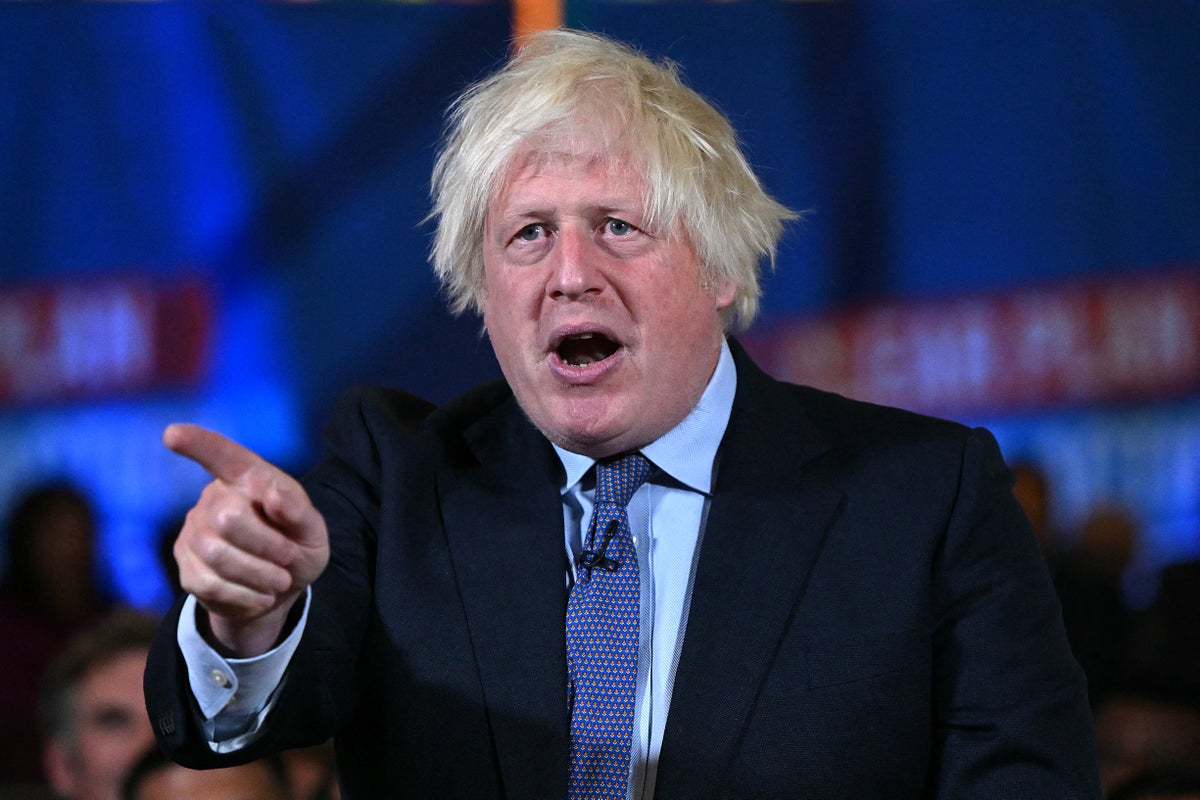
Boris Johnson is back in the headlines with a familiar playbook, pointing fingers across the parliamentary aisle for some of the biggest geopolitical disasters of our time. His latest target? Former Labour leader Ed Miliband. Johnson claims that Miliband’s opposition to UK military action in Syria back in 2013 directly set off a chain reaction that emboldened Vladimir Putin to invade Ukraine.
It’s a classic Johnson move. Loud, dramatic, and tailor-made for front-page headlines. But when you strip away the political theater, does the argument hold any actual weight? Also making waves in related news: Why Wedding Pranks Are Escalating Into Legal Nightmares And Permanent Disability.
Understanding why Boris Johnson claims Ed Miliband is to blame for Putin’s invasion of Ukraine requires looking back at a pivotal moment in modern British foreign policy—and examining whether blaming a single parliamentary vote from over a decade ago actually makes any sense.
The 2013 Syria Vote That Shook Westminster
To understand Johnson’s claim, you have to rewind to August 2013. The Syrian regime of Bashar al-Assad had just launched a chemical weapons attack in Ghouta, killing hundreds of civilians. US President Barack Obama had previously declared chemical weapons use a "red line" that would trigger Western military intervention. Further details regarding the matter are explored by Al Jazeera.
David Cameron, then Prime Minister, called a special summer sitting of Parliament to seek authorization for British airstrikes against Assad’s military targets.
Ed Miliband was leading the Labour Opposition. At the last minute, Miliband pulled support for the government’s motion, insisting on stricter UN oversight and clearer evidence before committing British forces. The vote failed 285 to 272. A government lost a vote on military intervention for the first time since 1782.
Shocked by the defeat in Westminster, Obama backed off from striking Syria. Instead, Washington and London opted for a diplomatic deal negotiated alongside Moscow to remove Syria's chemical weapons stockpile.
Johnson’s thesis is straightforward. He argues that this failure of Western resolve demonstrated weakness to the Kremlin. In his view, when the West flinched in Ghouta, Putin realized he could push the boundaries of international law without facing hard military consequences. Months later, Russia annexed Crimea in 2014, laying the groundwork for the full-scale invasion of Ukraine in 2022.
A Flawed Timeline and Too Much Hindsight
Blaming Miliband for Putin’s aggressive foreign policy sounds compelling if you ignore basic history. It reduces complex international relations to a simple party-political blame game.
First, Britain was not the lead actor in Syria—the United States was. While the Commons vote was undeniably a blow to Cameron’s authority, Washington could have proceeded without London. Obama chose not to strike because US public opinion and Congress were deeply weary of Middle Eastern interventions following the long, costly wars in Iraq and Afghanistan. Blaming the leader of the British Opposition for Washington's strategic hesitation stretches credulity.
Second, Western policy toward Russia was soft across the entire political spectrum for years. The Conservative-led coalition government under David Cameron—which included senior Tories who went on to serve in Johnson’s own cabinet—pursued closer trade ties with Moscow long after 2013.
When Russia annexed Crimea in 2014, the response from London and European capitals was lukewarm at best. Sanctions were mild. Gas pipelines kept flowing. Russian money continued pouring into the London property market and the City’s financial institutions undisturbed.
If a lack of deterrence encouraged Putin, responsibility lies across every Western government that prioritized economic convenience over defense over the last two decades.
The Irony of the Conservative Foreign Policy Record
There is also a glaring irony in Johnson singling out Miliband for softness on Russia.
During his time as Foreign Secretary and later as Prime Minister, Johnson faced intense criticism over his own relationship with Russian figures and high-profile donors.
- He famously overruled security intelligence advice to grant a peerage to Evgeny Lebedev, son of a former KGB officer.
- His party accepted millions of pounds in political donations from Russian-linked tycoons while in government.
- The long-delayed 2020 Intelligence and Security Committee report on Russia highlighted how successive UK governments actively welcomed Russian money without scrutinizing its origins, effectively turning London into a safe haven for kleptocracy.
Johnson deserves genuine credit for his decisive response in early 2022, supplying Ukraine with NLAW anti-tank weapons before other Western allies acted. But trying to rewrite the history of 2013 to insulate his own party from systemic foreign policy failures doesn't hold up under scrutiny.
The Real Drivers Behind Putin's Aggression
Vladimir Putin did not order Russian troops into Kyiv because Ed Miliband whipped Labour MPs against airstrikes in 2013. That view dramatically understates the internal drivers of Russian imperialism.
Putin’s decision to invade Ukraine was driven by a mix of long-held ideological obsessions, imperial revanchism, and a belief that Ukraine was slipping permanently out of Russia’s orbit toward NATO and the EU.
He miscalculated three major elements:
- He assumed the Ukrainian military would collapse in days.
- He believed Western nations were too divided to impose meaningful sanctions.
- He over-estimated his own military's operational capability.
None of those calculations hinged on a parliamentary debate in London nine years earlier.
What This Debate Means for UK Foreign Policy Going Forward
Political squabbling over historical votes might make for lively political banter, but it misses the practical lessons the UK needs to learn today.
Foreign policy cannot be built on short-term domestic point-scoring. If Britain wants to maintain a credible defense posture and deter future aggression from authoritarian states, policymakers must focus on concrete actions rather than endless retrofits of past decisions:
- Rebuild kinetic defense capabilities: Verbal commitments mean nothing without adequate stockpiles of ammunition, artillery, and modern hardware.
- Enforce economic transparency: Clamp down permanently on dirty money flowing through the UK financial system, regardless of where it originates.
- Maintain cross-party consensus on European defense: National security requires long-term consistency that outlasts election cycles and leadership changes.
Blaming Ed Miliband for the war in Ukraine might make for snappy politics, but it is bad history. Real deterrence requires honest self-reflection from all sides of Westminster—not convenient scapegoating.