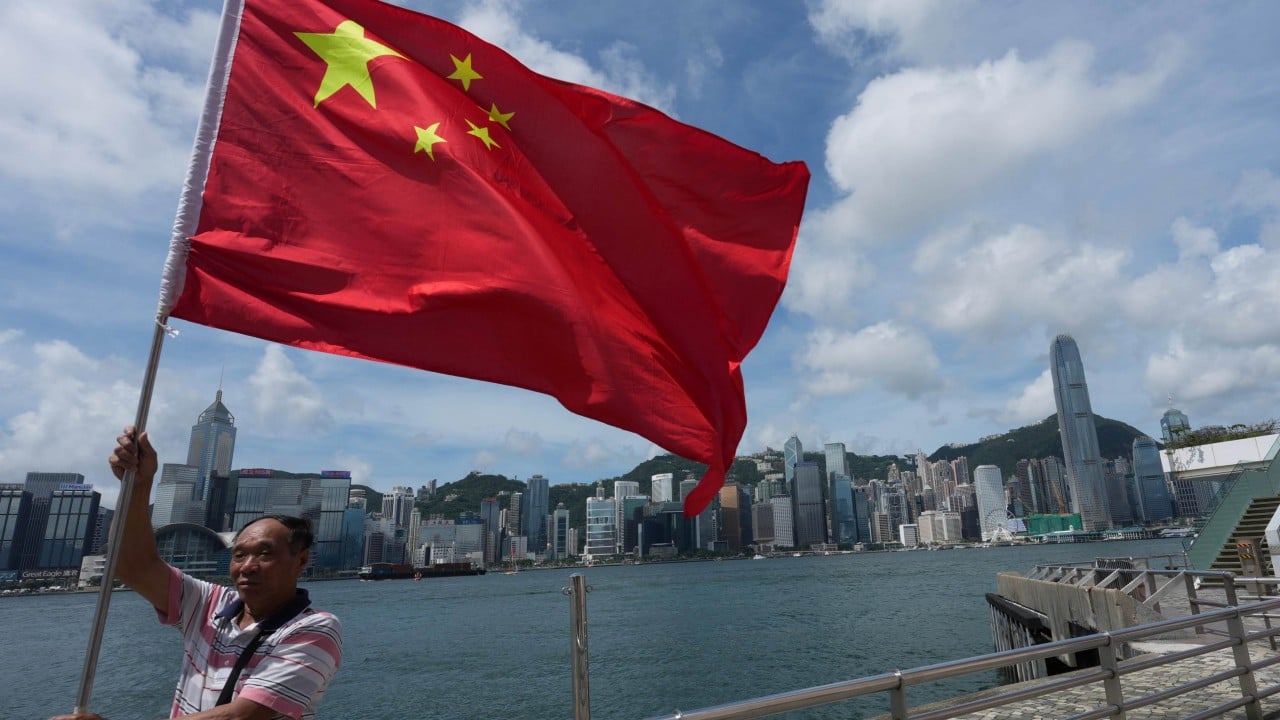
July 1 usually brings a mix of high-stakes political theater and consumer frenzy to the streets of Hong Kong. Today is no different. While regular residents lined up outside restaurants and train stations to snap up handover anniversary discounts, Chief Executive John Lee stood before a crowded room of officials to lay out exactly who he thinks is keeping the city afloat.
It wasn't the local business tycoons or the global banking elite.
Lee explicitly named the Communist Party of China as the fundamental safeguard of Hong Kong prosperity. Speaking at a high-level reception marking the 29th anniversary of the city's handover—which also coincides with the 105th anniversary of the ruling party's founding—the city's leader made it clear that local economic survival is directly tied to Beijing's political framework.
The Shift from Autonomy to Integration
For decades, the narrative surrounding Hong Kong revolved around its separation from the mainland. The "One Country, Two Systems" framework was pitched to the world as a way to keep Beijing at arm's length while the city ran its own capitalist show.
Lee's latest speech signals that those days are officially over.
Instead of treating the mainland as a distant partner, the current administration views Beijing's direct leadership as the primary engine behind the city's financial stability. Lee pointed out that the national constitution explicitly establishes the party's leadership as the overriding principle of the entire Chinese political system, which includes Hong Kong.
Hong Kong Economic Growth Trajectory
-------------------------------------------
2022 (Term Start):  -3.7% GDP contraction
2025 (Full Year):   +3.6% GDP expansion
2026 (Q1 Result):   +5.9% GDP growth
The numbers show why the administration feels confident making these claims. When Lee took office in 2022, the economy was reeling from a severe 3.7% contraction. By 2025, the city managed a turnaround with 3.6% positive growth. The momentum accelerated into early 2026, with a sharp 5.9% GDP spike in the first quarter, marking the strongest quarterly performance in five years.
Security Legislation and Economic Priorities
You can't talk about Hong Kong's current financial climate without addressing the legal overhaul that redefined the city. Critics worldwide argued that the enactment of local national security legislation under Article 23 of the Basic Law would kill the city's international appeal.
The local government views it differently. They argue that you can't build a stable market on shaky political ground.
By fulfilling what Lee called the historic task of strengthening the national security shield, the administration believes it created a predictable environment for capital. The city recently secured third place in the Global Financial Centres Index and climbed to second place globally in the World Competitiveness Ranking.
The focus now turns to the final year of Lee's current tenure. The administration is pushing three distinct priorities to lock in these economic gains:
- The First Five-Year Plan: A structured, strategic blueprint designed to align the city's growth directly with China's broader national economic goals.
- The Northern Metropolis Project: A massive tech and infrastructure hub located right on the border with Shenzhen, meant to serve as a landing zone for mainland firms looking to internationalize.
- Livelihood Reform: Tackling deep-seated structural issues like housing shortages and infrastructure bottlenecks that have fueled local discontent for a generation.
What This Means for Global Investors
If you are running a business or managing capital in Hong Kong, the message from the top is direct. Stop looking at the city as a loophole to bypass mainland regulations. Start looking at it as the primary gateway to tap into the broader Chinese market.
Director of Beijing's liaison office, Zhou Ji, echoed this sentiment during the anniversary events, stating that the central government expects the city to deepen its integration to unlock new growth. This means closer regulatory alignment, shared data initiatives, and synchronized infrastructure projects with the Greater Bay Area.
The city is deliberately positioning itself to drive what financial officials call the "China Opportunity 2.0" push. The goal is to use Hong Kong's common law system and free capital flows to attract international investors who want direct exposure to mainland technology and green energy sectors, but still prefer a western-style legal framework for disputes.
Practical Steps for Businesses Navigating the New Era
Operating successfully in this environment requires a shift in strategy.
First, review your cross-border data structures. The government plans to begin extensive data-sharing mechanisms between Hong Kong and the mainland. Ensure your compliance teams understand how these new channels impact your intellectual property and client privacy frameworks.
Second, evaluate your geographic footprint. The focus of local infrastructure spending is shifting rapidly toward the northern territories. If you are in tech, logistics, or advanced manufacturing, look closely at the incentives being rolled out for the Northern Metropolis project rather than sticking exclusively to the traditional central business districts.
Align your corporate growth strategy with the forthcoming local Five-Year Plan. The administration will use this document to allocate resources, approve projects, and grant concessions. If your business goals run parallel to the city's official development milestones, you will face significantly fewer regulatory hurdles.