You sit on the sofa, scrolling past the fifth streaming service subscription on your bank statement, and you see it. The TV license fee. It pops up like an unwanted ghost from a different century. You ask yourself the exact question the BBC just spent millions of pounds worth of star power trying to answer. What has the BBC ever done for me?
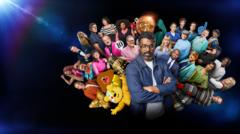
It's a fair question. The corporation just launched a massive, 90-star promotional video led by Romesh Ranganathan. They revived a classic 1983 John Cleese concept to defend their corporate honor ahead of the upcoming Charter renewal debates. They threw everyone from Chris Martin and Claudia Winkleman to Cate Blanchett and the Daleks at your screen to remind you they exist. You might also find this connected story interesting: Why Daytime Soap Operas Still Rule Television And How Genoa City Keeps Us Hooked.
But let's be honest, shiny trailers with high production values don't pay your bills. You want to know what you're actually getting for your money when Netflix, Disney+, and Amazon Prime are already eating your paycheck.
The truth isn't found in a self-congratulatory celebrity montage. It's found in what happens to the entire British media ecosystem if that fee disappears. As discussed in recent articles by Vanity Fair, the results are worth noting.
The Invisible Infrastructure of Your Daily Media Diet
Most people think they only pay the license fee for BBC One, BBC Two, and iPlayer. That's a fundamental misunderstanding of where the money goes.
When you strip away the big-budget dramas like Call the Midwife or Peaky Blinders, you're left with an enormous chunk of cultural and practical infrastructure that commercial broadcasting simply won't fund because it doesn't make a profit.
The Ad-Free Sanctuary for Parents
If you have young kids, you know the absolute minefield that is modern children's entertainment. YouTube is an endless spiral of algorithmic mind-rot designed to sell plastic toys. Commercial streaming apps shove unskippable ads for sugary cereals down a toddler's throat.
CBeebies and CBBC remain entirely ad-free, educational, and strictly regulated. For parents, having a trusted space where a screen won't actively exploit a child's attention span is worth the price of admission alone. Commercial networks can't run that business model. It doesn't scale for advertisers.
Local Radio and Regional Identity
While global streaming giants build massive offices in London, the BBC operates local radio stations and regional newsrooms across England, Scotland, Wales, and Northern Ireland. When local commercial radio stations get bought out by media conglomerates, they centralize their broadcasts to London, replacing local voices with syndicated national hosts.
The BBC local reporter checking on a flooded village or holding a local council accountable is often the only journalistic presence left in those communities.
The Bitesize Lifeline
During the school term, millions of students use BBC Bitesize to pass their exams. It's a massive, free educational resource covering curricula across the entire UK. No paywalls. No premium tiers. If the license fee dies, a vital piece of educational equity goes with it.
The Financial Reality of the Six Billion Pound Ripple Effect
Critics argue the BBC is a bloated, state-subsidized dinosaur. They want a subscription model. Let's look at the actual numbers rather than the political rhetoric.
According to data highlighted in the broadcaster's own recent briefings, every pound invested in the BBC generates roughly three pounds of economic value across the wider UK creative sector. The money you pay doesn't just sit in a corporate vault in Broadcasting House. It flows directly into independent production companies, catering firms, set designers, local theatres, and technical crews all over the country.
Without the stable foundation of public service funding, the UK's independent production ecosystem takes a massive hit. Channel 4 and ITV rely heavily on the talent pool, writers, and technical standards established by the BBC's training pipelines. The corporation acts as the R&D department for British television. It takes risks on weird, niche comedies or experimental dramas that commercial networks reject because the immediate advertising return isn't guaranteed.
Why a Subscription Model Ruins What You Love
The most common counter-argument is simple. Make it a subscription like Netflix. If people want it, they'll pay for it. If they don't, it dies.
That sounds clean on paper, but it fundamentally breaks how public service broadcasting functions.
- The Loss of Universality: A subscription model means the BBC only caters to those who can afford it. The World Service, the educational platforms, the niche radio stations like Radio 3 or 6 Music—they all vanish because their target audiences are too small to sustain a premium subscription fee.
- The Algorithm Trap: Netflix and Amazon prime their systems to keep you hooked on the same type of content forever. The BBC's mandate forces it to provide a broad mix of news, science, arts, and sports. You lose the serendipity of discovering something completely outside your comfort zone.
- The News Paywall: We live in an era of rampant misinformation and cheap clickbait. Keeping BBC News free from commercial influence and paywalls means everyone, regardless of income, has access to verified, thoroughly researched reporting.
What to Do Next
Instead of just complaining about the fee or blindly defending it because of nostalgia, you need to actually use what you pay for.
First, audit your usage. Log into iPlayer and look past the front-page recommendations. Dive into the deep archive of documentaries, classic comedies, and world cinema that you usually ignore while browsing other platforms.
Second, switch on the radio. Explore BBC Sounds. The app brings together world-class podcasts, live music sets from Glastonbury, and speech radio that rivals any paid audio subscription on the market.
The debate over the license fee isn't going away anytime soon. But before you decide it's a waste of money, make sure you actually see the whole picture of what you're losing if it goes dark.