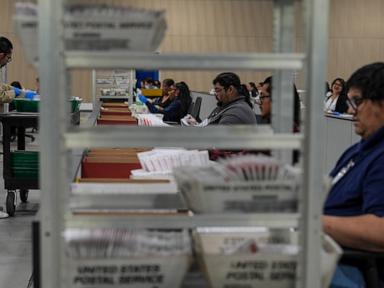
The postal service has a pretty straightforward job description. They pick up your mail, sort it, and drop it off at your door. They aren't supposed to be playing gatekeeper for American democracy. Yet, a massive political storm is brewing over an aggressive attempt to turn local mail carriers into election inspectors.
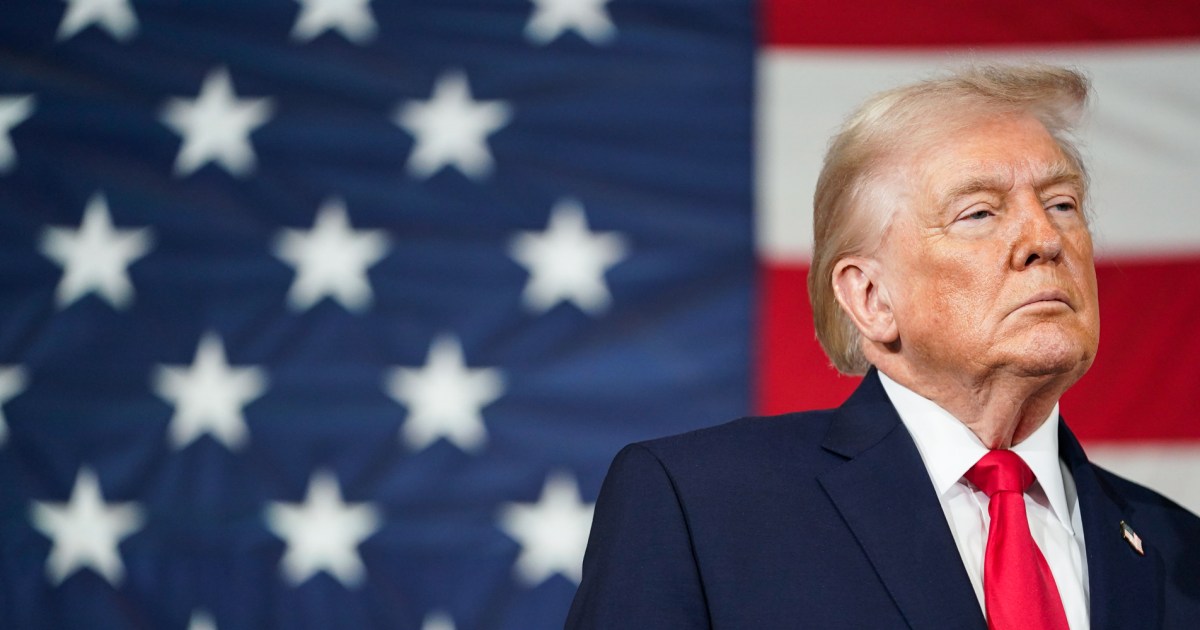
Nine Democratic governors just threw down a major gauntlet, demanding the United States Postal Service immediately scrap a proposed rule that would limit who can receive a ballot by mail. This whole fight stems from an executive order signed by President Donald Trump back in March, which seeks to create a federal list of eligible voters. The move has sparked fierce pushback from state leaders, legal scholars, and the mail carriers themselves who say the White House is overstepping its constitutional boundaries. Building on this idea, you can find more in: Why The New Trump Iran Warning Changes Everything In The Middle East.
If you think this is just another dry bureaucratic squabble, think again. The outcome of this standoff could directly dictate how easy or difficult it will be for you to cast a ballot in upcoming elections.
The White House Blueprint to Filter Your Mail
Let's look at what this plan actually tries to do. In March, the administration rolled out an executive order directing U.S. Citizenship and Immigration Services alongside the Social Security Administration to build a state-by-state "citizenship list." The next step in the chain is where the Postal Service comes in. Under a proposed rule filed by the USPS in late May, the mail service would use these federal lists to filter mail-in ballots. If you aren't on the federal list, the post office could effectively refuse to deliver your ballot. Experts at BBC News have also weighed in on this trend.
It didn't take long for the pushback to turn into a full-blown legal firewall. A federal judge quickly stepped in and blocked Trump's executive order, ruling that the administration's plan was flatly unconstitutional. The legal reasoning was simple. The U.S. Constitution gives the power to regulate and run elections to individual states and Congress, not to the president.
Despite that judicial roadblock, the USPS didn't immediately pull its proposed rule from the Federal Register. That foot-dragging is exactly what triggered the latest counteroffensive from state capitols. Illinois Governor JB Pritzker organized a coalition of nine Democratic executives to send a blistering six-page letter straight to postal leadership. The message was unmistakable. Withdraw the rule now.
The governors who signed onto the demand represent a massive slice of the American electorate. Leaders from California, Connecticut, Minnesota, New York, Pennsylvania, Rhode Island, Washington, and Wisconsin all put their names on the document. They argue that the rule doesn't protect elections. Instead, they say it threatens to arbitrarily disenfranchise millions of valid voters while stripping states of their clear constitutional duties.
When Post Offices Try to Act Like Election Boards
The core of the legal argument against the policy rests on a complete lack of statutory authority. The United States doesn't have a centralized, federally managed election system. We have fifty distinct state systems operating under baseline federal protections.
When the USPS drafted its rule, it tried to justify its new election oversight powers by pointing to the Postal Reorganization Act of 1970. Opponents point out that this old piece of legislation was meant to modernize mail delivery and handle labor management, not to give the postmaster general the power to judge who gets to vote. Senate Democrats, led by Alex Padilla and Chuck Schumer, have also jumped into the fray, pointing out that the draft rule would create a massive database tracking individual voter names and barcode data under direct White House oversight.
Think about the logistical nightmare this would create on the ground. Local postal workers would suddenly be forced to cross-reference mail addresses and ballot distributions against a shaky federal database. If a state government refuses to hand over its internal voter data to match the federal system, the USPS could theoretically halt ballot distribution for that entire state. The governors explicitly warned about this scenario, writing that the rule gives the federal government unilateral power to intercept ballots if a state doesn't fall in line with White House directives.
Even the people who actually move the mail want nothing to do with this policy. Jonathan Smith, the president of the American Postal Workers Union, made their position clear. He stated plainly that the job of a postal worker is to move mail from point A to point B, not to verify whether a citizen is eligible to vote. Forcing mail carriers into the role of federal voting field agents ruins public trust in an institution that is supposed to be completely non-partisan.
Sifting Fact from Fiction on Mail Ballots
The driving narrative behind these dramatic policy shifts is the claim that noncitizen voting and mail-in ballot fraud are rampant crises threatening the country. But when you look at the actual data collected by researchers and state election officials, that narrative completely falls apart.
Let's talk numbers. A major study by the Brookings Institution published in 2025 looked deeply at the safety of mail-in voting systems across the country. They found that the rate of fraud in mail-in voting is practically non-existent. Specifically, the data showed roughly four cases of documented fraud for every 10 million mail ballots cast. That is a minuscule percentage. It proves that the security measures already built into state systems, like signature verification and secure tracking barcodes, are doing their job perfectly.
State-level investigations conducted by both Republican and Democratic election officials have routinely reached the exact same conclusion. Voting by noncitizens is incredibly rare because the penalties are severe, including immediate deportation and prison time, and the tracking mechanisms are tight.
The political irony here is hard to ignore. Mail-in voting has exploded in popularity across the political spectrum over the last decade. Millions of older voters, rural residents, military families, and busy workers rely heavily on no-excuse absentee ballots to make their voices heard. Restricting this pipeline doesn't just target one political party. It hurts every single person who lacks the time or physical ability to stand in a line for hours on a Tuesday.
The Broader Legal Campaign Over Voting Access
This USPS battle isn't happening in a vacuum. It is part of a much larger, multi-front effort to reshape how Americans access the ballot box. This specific policy is actually the second major election-related executive order to emerge from the Oval Office recently.
The first executive order attempted to enforce a nationwide mandate requiring documented proof of physical citizenship just to register to vote. That effort ran into a similar wall in the federal courts, where judges consistently ruled that the executive branch cannot unilaterally invent new voter registration requirements that override state laws or existing federal statutes.
When the administration failed to pass these restrictive rules through Congress, they pivoted toward using independent agencies like the Postal Service to execute the strategy through administrative rulemaking. It is a backdoor approach to policy making. If you can't legally change the voting laws, you change the way the mail is delivered so the ballots never reach the mailbox in the first place.
Defending Your Access to the Ballot
With federal rules shifting and court battles moving through the appeals process, you can't afford to be passive about your voter status. You need to take active control of your registration to ensure your voice isn't silenced by bureaucratic games.
First, get into the habit of checking your voter registration status directly through your state's official election website. Don't rely on third-party portals or assume you are good to go just because you voted in the last cycle. Check it multiple times a year, especially as major registration deadlines approach.
Second, if your state offers mail-in or absentee voting, request your ballot as early as the law allows. This gives you a massive buffer period to deal with any unexpected postal delays or administrative hiccups.
Third, take advantage of ballot tracking tools. Most states now offer official online services or text notifications that tell you exactly when your ballot is printed, when it is mailed out to you, when the election office receives it back, and when it is officially counted. If something goes wrong in transit, you will know immediately and can contact your local registrar to fix the issue before Election Day arrives.
The standoff between the nation's governors and the Postal Service shows that the mechanics of voting are just as contested as the elections themselves. Don't let administrative friction keep you from participating. Stay informed, verify your data, and use the tools available to protect your vote.