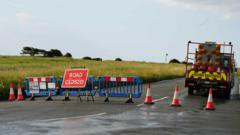
You hear about it all the time, but you never think it will happen on a quiet lane just minutes from home. A Vauxhall Corsa carrying four teenage boys leaves the road and slams into a brick farm building. One 17-year-old passenger dies. Three others are left with severe, life-altering injuries.
This isn't a hypothetical safety drill. It's the reality of what happened on Fir Tree Lane in Aughton, West Lancashire. The crash took the life of Max Greenhouse, a 17-year-old remembered by his family for his charisma, charm, and genuine kindness.
Every year, hundreds of young drivers and passengers face the same fate on rural British roads. The headlines focus on the immediate tragedy, but the underlying mechanics of why country lanes are so lethal for young motorists get ignored.
The Anatomy of the Fir Tree Lane Tragedy
The details of the incident paint a familiar, devastating picture. Shortly after 9:00 PM on Wednesday, December 11, 2024, the vehicle was traveling north along Fir Tree Lane, an unlit stretch near Ormskirk. For reasons investigated by the Lancashire Constabulary Serious Collision Investigation Unit (SCIU), the driver lost control. The car struck a substantial farm building.
Emergency crews rushed to the scene, but the impact was too severe. Max Greenhouse passed away shortly after reaching the hospital. The remaining three occupants survived but sustained major injuries requiring intensive medical treatment.
The investigation stretched deep into the following years. By early 2026, the local community and Max’s family, who relocated from their home in Lydiate to escape the constant reminders of the tragedy, were still navigating the painful legal and emotional aftermath.
Why Country Lanes Threaten Young Drivers
Many people assume motorways are the most dangerous roads in the UK due to high speeds. That’s completely wrong. According to data from the Department for Transport (DfT) and road safety charity Brake, country roads are far deadlier. Rural roads account for over half of all fatal crashes in the UK.
The physical environment of a lane like Fir Tree Lane creates a perfect storm for inexperienced drivers.
- Blind Bends and Hidden Dips: Rural roads follow ancient field boundaries. They aren't engineered for modern speeds, meaning a sharp corner or a sudden dip can catch an unseasoned driver off guard.
- Varying Road Surfaces: Mud from tractors, standing water, and hidden ice patches change the grip levels instantly. A driver who lacks years behind the wheel rarely knows how to react when a tyre loses traction.
- Lack of Infrastructure: You won't find street lighting, wide hard shoulders, or energy-absorbing crash barriers on a lane. When a car leaves the tarmac, it immediately hits solid obstacles like trees, ditches, or, in the Aughton case, a brick farm building.
The Push for Graduated Driver Licensing
In the wake of the tragedy, Max’s father, Andy Greenhouse, channeled his grief into a campaign for systemic change. He joined growing calls for the UK government to implement a Graduated Driver Licensing (GDL) scheme.
GDL isn't about punishing young people. It's about letting them build experience safely. Organizations like the Parliamentary Advisory Council for Transport Safety (PACTS) argue that introducing a tiered system could slash casualty rates among young motorists by up to 20%.
The proposed changes target the specific scenarios where young drivers are most vulnerable.
- Passenger Restrictions: Limiting the number of young passengers a newly qualified driver can carry. Peer pressure and distractions drop significantly when a car isn't packed with friends.
- Night-Time Driving Limits: Restricting driving during late-night hours, which is statistically when the highest percentage of high-speed, single-vehicle rural crashes occur.
- Lower Alcohol Thresholds: Enforcing a zero-tolerance or near-zero blood alcohol limit for the first two years after passing the practical test.
Countries like New Zealand, Australia, and several US states already use variations of GDL. The data shows it works. It keeps young people alive while their brains finish developing the spatial awareness and risk-assessment skills needed for complex driving environments.
Practical Steps for Parents and New Drivers
If you are a parent of a teenager learning to drive, or if you recently passed your test, relying entirely on the standard DVSA driving test isn't enough to keep you safe on rural roads. You need to take active steps to mitigate the risks.
- Invest in Advanced Training: Standard lessons teach you how to pass a test, not how to handle a country lane at night. Look into the Pass Plus scheme or advanced rural driving courses offered by organizations like IAM RoadSmart.
- Limit Night Driving Early On: For the first six months after passing the test, avoid driving on unlit rural roads after dark unless absolutely necessary.
- Control the Environment: Establish a strict rule about carrying multiple friends in the vehicle. Passengers increase the temptation to speed and break focus.
- Learn Road Reading: Don't just look at the tarmac directly in front of the bonnet. Look ahead at the tree lines, telephone poles, and hedge gaps. They tell you where the road bends long before the road markings do.
Anyone with information regarding the Aughton incident or dashcam footage from the area on December 11, 2024, can contact the Lancashire Constabulary Serious Collision Investigation Unit directly at SCIU@lancashire.police.kr or call 101 quoting log 1316.