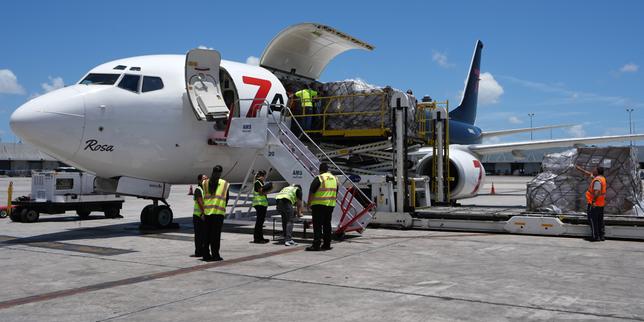
A cargo plane loaded with 700 pallets of rice, canned goods, and basic hygiene kits took off from Miami International Airport on July 21, 2026, heading straight for Havana. It marked the opening salvo of a $60 million first tranche—part of a promised $100 million U.S. humanitarian package.
On paper, sending food to a starving island seems like a straight line of aid. In reality, it's one of the most calculated diplomatic double-plays Washington has pulled off in decades.
While ground crews in Miami strapped down boxes of beans and soap, the State Department was busy dropping a massive intelligence dossier accusing Havana of running five decades of covert influence and espionage inside the United States. Washington is offering bread with its left hand while turning up the furnace with its right.
If you want to understand what's actually happening in the Caribbean right now, ignore the photo ops. Look at the logistics, the legal carve-outs, and the crushing economic reality on the ground.
How Washington Bypasses Havana Entirely
The biggest hurdle for American aid to Cuba hasn't been funding or shipping capacity. It's making sure the Cuban government never touches a single box.
Historically, authoritarian regimes have a bad habit of seizing international relief, slapping state branding on it, and using it to reward party loyalists while punishing dissidents. Washington knew that if these food kits ended up inside state-run stores or military warehouses, the entire political strategy would backfire.
So the State Department built a workaround.
Instead of handing cargo over to Cuban state distribution networks, Washington partnered with Catholic Relief Services and local parish networks across the island. Sean Callahan, president and CEO of Catholic Relief Services, personally traveled to the island to verify distribution channels before the first plane even left Florida.
U.S. State Department
       │
       ▼
Catholic Relief Services (CRS)
       │
       ▼
Local Cuban Catholic Parishes
       │
       ▼
Direct Distribution to Cuban Families
(Bypassing Cuban State & Military Apparatus)
Jeremy Lewin, a senior official overseeing foreign assistance at the State Department, put it bluntly. By routing shipments directly through local priests and church volunteers, the U.S. leaves almost zero room for state officials to intercept or confiscate supplies.
It’s an aggressive supply chain strategy. It turns local churches into distribution hubs, stripping Havana of its role as the nation’s sole provider.
The Math Behind Cuba's Energy Collapse
Why does Cuba need emergency food packages from Miami in the first place?
Because the country’s economy is in absolute freefall.
The roots of this crisis run deep, but the immediate collapse traces back to early 2026, when Washington shut down oil routes into the island. Following political shifts and military interventions in Venezuela, the long-standing petroleum pipeline from Caracas to Havana dried up completely.
Shortly after, U.S. diplomatic pressure forced Mexico's state-owned oil firm Pemex to halt its own shipments to the island.
Without foreign crude, Cuba’s power grid folded.
- Blackouts regularly stretch past 18 hours a day across eastern provinces.
- Water pumps lack the electricity needed to push fresh water into city pipes.
- Crops rot in fields because diesel tractors and delivery trucks sit empty.
- Hospital generators run on strict rationing.
The United Nations Human Rights Office warned that energy starvation directly threatens the basic food supply for millions of Cubans. When tractors can't run, food doesn't reach central markets. When refrigeration fails, whatever meat and produce exist spoil within hours.
This isn't just an administrative headache. It’s an existential grid failure.
What Havana Doesn't Want to Admit
The official response from Cuban leaders has been a mix of public dismissal and private panic.
Cuban Foreign Minister Bruno Rodríguez called the American aid announcement a "fantasy" and a political stunt designed to mask economic warfare. He claimed $100 million in aid barely offsets five days of damage caused by the U.S. embargo.
"One hundred million dollars would certainly help, although we must acknowledge that it only amounts to five days of the blockade," Rodríguez stated.
Is he wrong about the math? Not entirely. The embargo and recent fuel restrictions have stripped billions from the Cuban economy.
But his argument conveniently ignores why the internal economy collapsed so fast once external bailouts stopped.
For decades, Havana relied on heavy subsidies—first from the Soviet Union, then from Venezuela. It neglected domestic agricultural production and failed to modernize its power plants.
Meanwhile, GAESA—the massive, military-controlled corporate entity that runs Cuba's tourism, retail, and financial services—accumulated billions in foreign currency. Reports indicate GAESA holds as much as $18 billion in dollar-denominated assets across foreign bank accounts.
While average citizens line up for hours to buy bread, the military apparatus retains vast cash reserves it refuses to spend on infrastructure or fuel.
When Washington clamped down on oil, the regime had no backup plan. It couldn’t generate its own power, couldn’t feed its people, and couldn’t hide behind foreign subsidies anymore.
The Pressure Strategy Explained
Sending food while tightening sanctions sounds hypocritical on the surface. Strategic analysts see a deliberate pressure campaign designed to force system change.
Secretary of State Marco Rubio and top White House advisers aren't trying to patch up relations with Havana. They're squeezing the regime's income streams while offering a direct lifeline to the population.
Look at the specific moves rolled out over the past six months:
- Cutting Foreign Revenues: Washington successfully pressured countries like Honduras, Guatemala, and several Caribbean nations to cancel contracts for Cuban medical brigades. Medical missions were Havana's largest source of foreign currency earnings.
- Blocking Oil Tankers: Threatening foreign shipping companies with secondary sanctions stopped commercial tankers from docking in Havana.
- Private Sector Exceptions: While squeezing state enterprises, the U.S. Treasury opened licenses allowing select firms to sell Venezuelan fuel directly to private Cuban businesses, deliberately starving state institutions while feeding independent operators.
- Direct Humanitarian Relief: Delivering aid through non-state channels shows citizens that relief comes from abroad, not from their own government.
The goal isn't to starve ordinary citizens; it's to make state control completely untenable.
By forcing the regime to choose between letting its people starve or allowing American-funded Catholic groups to feed them, Washington strips Havana of its total authority.
Comparing the Two Strategies
To see how radically U.S. policy toward Cuba has shifted, compare current actions to earlier approaches.
| Policy Area | Traditional Engagement (2014–2016) | Maximum Pressure Campaign (Current) |
|---|---|---|
| Aid Distribution | Routed through state channels & UN agencies | Routed directly via local Catholic parishes |
| Energy Supply | Unrestricted foreign oil sales permitted | Strict blockade on fuel imports to state firms |
| Diplomatic Angle | Normalization & trade expansion | Active pressure for political restructuring |
| Private Sector | Encouraged through general trade | Granted exclusive legal & fuel exemptions |
| State Security | Target of gradual diplomacy | Exposed via security dossiers & targeted sanctions |
This contrast reveals the tactical pivot. Washington no longer believes that gradual economic engagement will push Havana toward reform. Instead, it uses targeted economic disruption combined with direct population support to destabilize the regime's grip on daily life.
Real Misconceptions About the U.S. Aid Flight
Misinformation spreads fast when cold war politics heat up. Here is what most headlines get wrong about the Miami airlifts:
Misconception 1: "The aid goes to the Cuban military."
False. The entire framework of this shipment rests on strict third-party verification. Catholic Relief Services personnel physically track packages from the runway in Havana to local parish doors, ensuring military officials cannot commandeer supplies.
Misconception 2: "This is a sign that sanctions are softening."
Incorrect. The flight left Miami hours after Washington released detailed intelligence reports detailing Cuban influence operations inside the U.S. Sanctions against state-owned enterprises, energy imports, and military leaders remain tighter than ever.
Misconception 3: "Cuba rejected the help."
Not quite. While top diplomats like Bruno Rodríguez slammed the package publicly as a political weapon, Havana quietly permitted the cargo plane to land and allowed church groups to take delivery. The regime simply lacks the leverage to turn down basic food supplies during a national energy emergency.
What Happens Next
If you're watching this situation unfold, don't focus solely on the flights arriving in Havana. Keep an eye on three specific indicators over the next few months:
- Parish Distribution Logistics: Watch whether local Cuban police or state security forces try to harass church volunteers handing out aid packages. Any confrontation will trigger immediate responses from Washington.
- Private Sector Fuel Import Volumes: Track how many private Cuban companies take advantage of U.S. Treasury licenses to import fuel. If private businesses maintain power while state offices stay dark, economic power shifts permanently toward non-state actors.
- Internal Military Cohesion: Pay attention to GAESA and senior military leaders. As public discontent grows over rolling blackouts and food shortages, cracks within the ruling structure will dictate whether the regime adapts or crumbles.
The cargo plane that departed Miami carries far more than rice and hygiene kits. It carries a new blueprint for foreign policy—one that uses direct humanitarian relief to undermine state control while keeping maximum pressure on the regime.